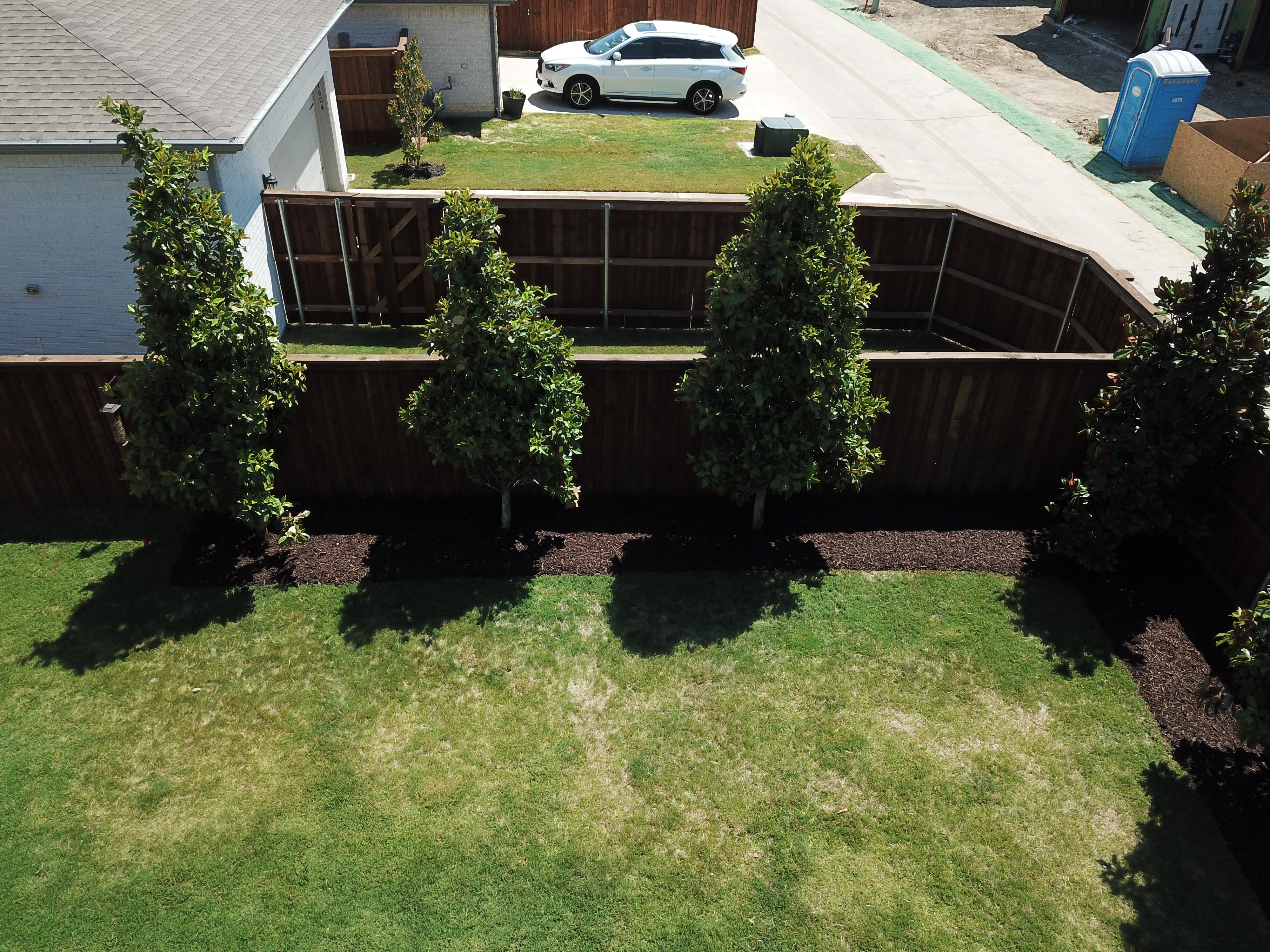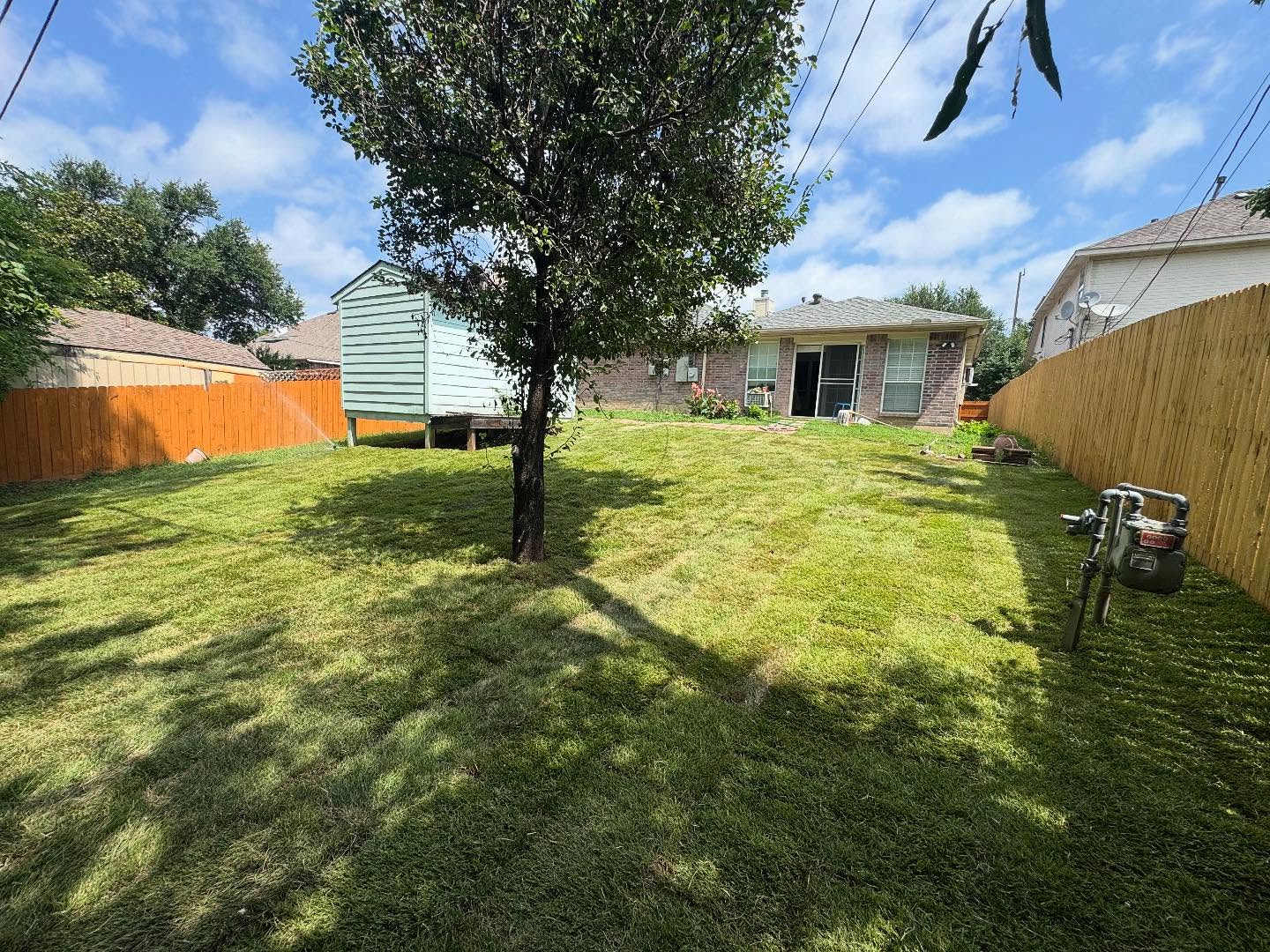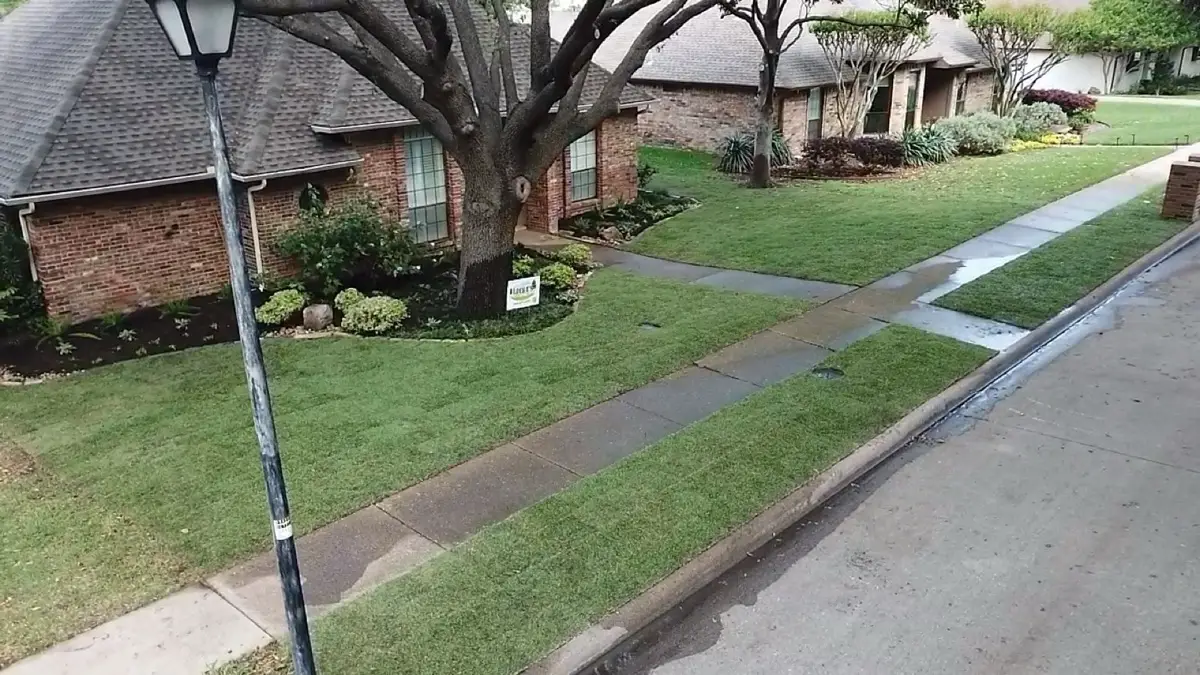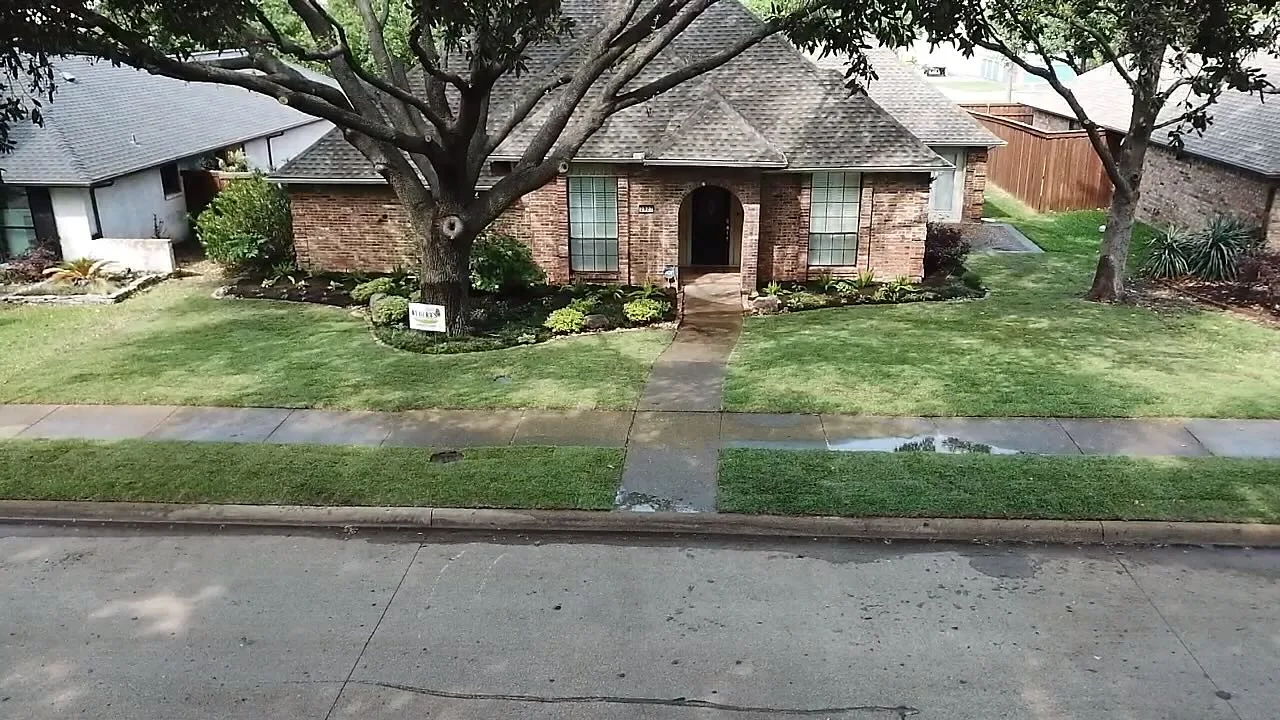
For most DFW yards, Palisades Zoysia is the right choice, and Zeon is the boutique upgrade. Palisades is a wide-bladed zoysia that handles our Blackland Prairie clay, takes part shade far better than Bermuda, and holds up on the twice-a-week watering a North Texas summer actually allows. Zeon is a finer, softer zoysia that looks like a putting green, but it costs more, wants steadier care, and rewards a homeowner who treats the lawn as the project rather than the background.
Both are genuinely good grasses, so this is not a right-versus-wrong call. We install a lot of Palisades around Carrollton, Plano, and Frisco because it fits how most families actually live: kids and dogs on the grass, a sprinkler system running on a city schedule, and nobody wanting a second job keeping the yard alive. Zeon is the grass you pick when a showcase lawn is the whole point. Here is how the two really compare once the sod is down and rooted.
Zeon vs Palisades at a glance
| Factor | Palisades Zoysia | Zeon Zoysia |
|---|---|---|
| Blade | Medium-wide, soft | Fine, carpet-soft |
| Look | Lush and full | Putting-green |
| Shade tolerance | Good, takes part shade | Slightly better than Palisades |
| Traffic, kids, dogs | Excellent, hides wear | Very good, shows scuffs sooner |
| Mowing | Standard rotary, a touch taller | Best low with a reel mower |
| Upkeep | Low, forgiving | Higher, more exacting |
| Water once established | Low, twice-a-week friendly | Low, twice-a-week friendly |
| Cost | Mainstream zoysia | Premium, specialty |
| Best for | Most DFW family yards | Showcase lawns |
What Palisades Zoysia is
Palisades is a japonica-type zoysia with a medium-to-wide blade and a soft, dense feel underfoot. It was developed for Texas conditions, and it shows: it greens up thick in spring, chokes out most weeds once it is established, and shrugs off traffic from a family and a dog or two. It is the zoysia we install most, and it is one of the three grasses named on our sod page alongside Bermuda and St. Augustine.
The blade is the thing you notice. Palisades is wider and a little coarser than Zeon, which is exactly why it is forgiving. It hides an uneven mow, bounces back from a rough weekend of backyard football, and does not punish you for missing a feeding. For a normal North Texas yard, that forgiveness is worth more than a perfect texture.
What Zeon Zoysia is
Zeon is a matrella-type zoysia, and matrella means fine. The blade is thin, soft, and dense enough that a well-kept Zeon lawn genuinely looks like a golf green. It is the grass people photograph. If you have ever walked a lawn barefoot and thought it felt like carpet, there is a good chance it was a fine-bladed zoysia like Zeon.
That fineness is the whole appeal and the whole catch. A carpet-fine lawn shows every flaw, so Zeon rewards attentive mowing (often with a reel mower for the cleanest cut), consistent feeding, and an owner who enjoys the upkeep. Homeowners around DFW do ask us about Zeon, and we can quote it on request. It is a premium, specialty install, not our everyday roll of sod. If Zeon is the grass you are leaning toward, our full guide to Zeon Zoysia in DFW covers shade, watering, and upkeep in more detail.
Shade: the real North Texas question
Both of these zoysias handle part shade far better than Bermuda, which is the single biggest reason DFW homeowners move to zoysia in the first place. Under a mature live oak or a big pecan, Bermuda thins out and goes patchy, while a zoysia holds its color and density.
Between the two, Zeon tolerates a bit more shade than Palisades, so a heavily filtered backyard can tip the decision toward the finer grass. But neither zoysia is a true deep-shade grass. If a spot gets only a couple hours of real sun, St. Augustine is usually the honest answer, and we will tell you so. We break the shade question down further in our guide to the best grass for shade in North Texas.
Feel, look, and the putting-green thing
If your priority is how the lawn looks in a photo and feels on bare feet, Zeon wins. It is finer, softer, and darker, and a maintained Zeon lawn is genuinely stunning.
If your priority is a great-looking lawn that also survives real life, Palisades wins. It still feels soft and looks lush, it just does it while taking abuse that would leave scars on a putting-green grass. Most of our customers, once they walk both, land on Palisades. It gives them most of the look for a fraction of the fuss.
Watering and our clay
Both grasses are drought-tough once established, which matters under DFW watering rules that often cap you at twice a week in summer. Zoysia roots deep and stays green on less water than St. Augustine needs, and both Palisades and Zeon take our heat.
The bigger issue in North Texas is not the grass, it is what is under it. Our Blackland Prairie clay swells when wet and cracks when dry, and sod laid on unprepped clay never roots right no matter which variety you choose. That is why every install we do starts with grading and soil prep. There is more on the clay-soil reality and the first-30-days watering plan in our complete guide to sod installation in DFW.
Mowing and upkeep
Palisades is the lower-maintenance of the two. It grows at a moderate pace, takes a standard rotary mower, and forgives an inconsistent schedule. Mow it a touch taller and it stays happy.
Zeon asks for more. It looks its best cut low and clean, which usually means a reel mower and a steadier hand, and it wants consistent feeding to hold that dense, dark carpet. Neither is high-maintenance the way St. Augustine can be, but between the two, Palisades is the set-it-and-live-your-life grass and Zeon is the enthusiast's grass.
Cost and availability
Zoysia in general costs more than Bermuda, and among zoysias, Zeon sits at the top as a premium specialty sod. Palisades is priced as a mainstream zoysia and is easy to source, which is part of why it is our standard zoysia install. Full-yard sod projects around DFW generally run anywhere from about $1,200 to $14,000 depending on size, the grass you choose, and how much prep the yard needs. Zeon lands at the higher end for the grass itself, and we quote it on request rather than stock it as an everyday roll.
If you want to see how zoysia stacks up against the other two grasses we install, our Bermuda vs Zoysia vs St. Augustine comparison lays out the whole field.
How fast each one roots
Both zoysias establish more slowly than Bermuda, and both are vegetative grasses, which means they go in as sod, not seed. On prepped soil with the right watering, new zoysia sod knits to the ground in about two to three weeks and is well rooted by four to six. It then takes the better part of a season to thicken into that signature dense mat, because zoysia spreads slower than Bermuda, so we lay it tight from the start to leave no gaps to fill. Fall and spring are the easiest install windows. A summer install works, but only if you commit to the frequent early watering a new lawn needs in the heat.
Kids, dogs, and real traffic
Both grasses take a family and a dog, but Palisades is the more forgiving of hard play. The wider blade hides wear and springs back from a rough weekend without showing scars. Zeon is dense and durable too, but its fine, formal surface shows scuffs, ruts, and pet spots sooner. If your backyard doubles as a dog run and a soccer field, Palisades is the safer call. If it is a lower-traffic lawn you want to look flawless, Zeon earns its keep.
Large patch: the one zoysia problem to watch
The disease to know with any zoysia in North Texas is large patch, a soil-borne fungus that shows up as circular tan or brown patches a few feet across in fall and spring, when soil temperatures sit in the 50s to 70s and the lawn stays wet. It is more a watering-and-drainage issue than a grass flaw: overwatering, evening watering, and poor drainage on our clay are what feed it. Prevention is the same routine that keeps any DFW lawn healthy, water in the early morning only, ease off in the cooler shoulder seasons, and keep drainage moving, and it starts with proper grading at install. If you are not sure whether a brown patch is disease or heat, our guide on lawn fungus versus heat stress shows how to tell them apart.
Common questions
Is Zeon or Palisades better for shade? Both handle part shade far better than Bermuda. Zeon takes a little more, but neither is a deep-shade grass. If a spot gets only a couple hours of real sun, St. Augustine is the honest answer.
Can you seed Zeon or Palisades? No. Both are vegetative zoysias, so they are installed as sod, not grown from seed.
How long until zoysia fills in? It roots in four to six weeks and takes most of a season to thicken into a dense mat, which is why we lay it tight from the start.
Does zoysia go dormant in winter? Yes. Like all warm-season grass in North Texas, both varieties go tan and dormant after the first hard frost and green back up in spring.
Which is cheaper? Palisades. Zeon is a premium specialty sod that sits at the top of the zoysia range.
So which should you plant?
Pick Palisades if you want a tough, soft, shade-friendly lawn that looks great and lives easy. That is most yards in Carrollton, Coppell, Plano, and Frisco, and it is why it is what we install most.
Pick Zeon if the lawn is the centerpiece, you have decent sun, and you genuinely enjoy dialing in a flawless, putting-green surface. It is the right call for the homeowner chasing showcase over simple.
Let us look at your actual yard
The honest truth is that the right grass depends on your specific sun, slope, soil, and how you use the yard, and that is a five-minute conversation standing in it. We walk your yard, check the light and the drainage, and give you a straight recommendation with a free on-site estimate. Reach out here and we will tell you which zoysia actually fits your place, Palisades or Zeon.