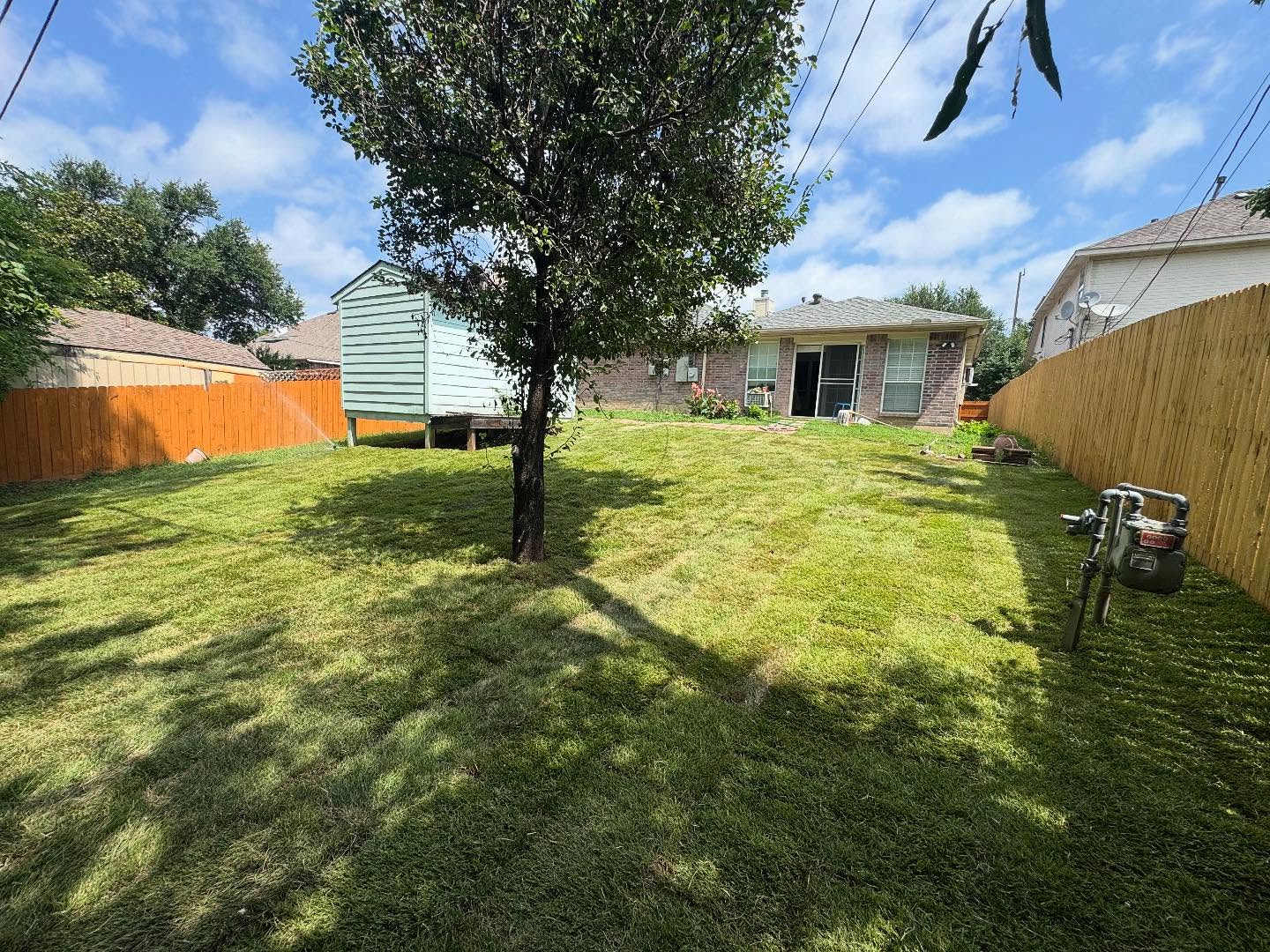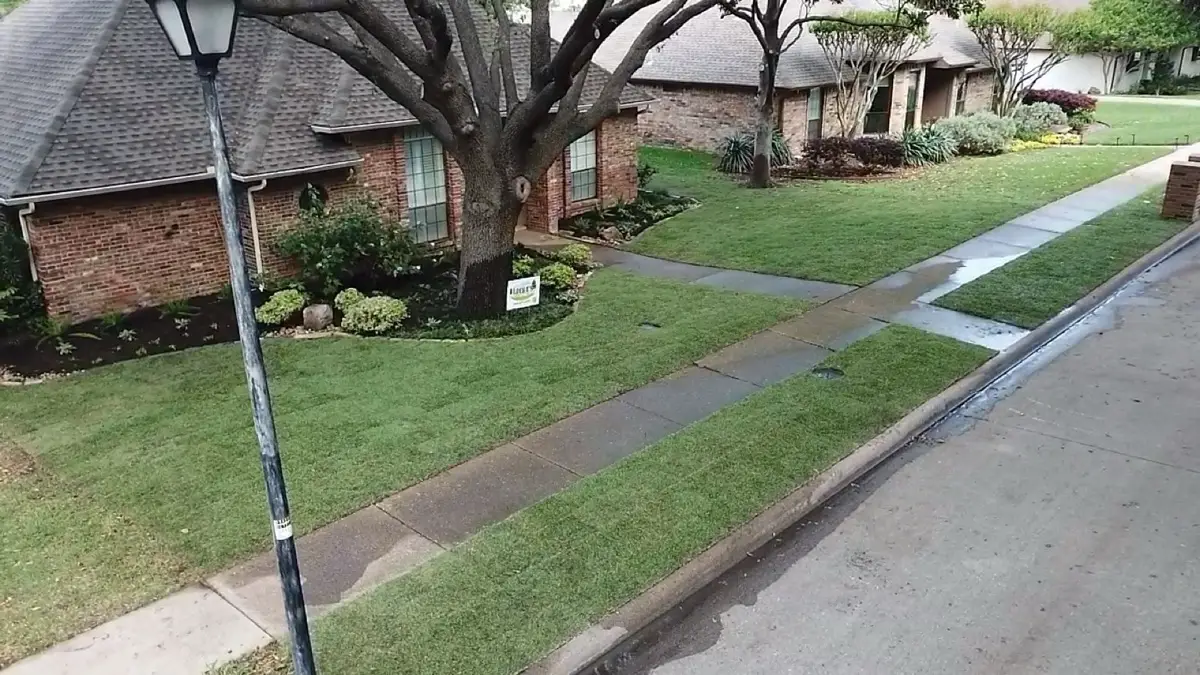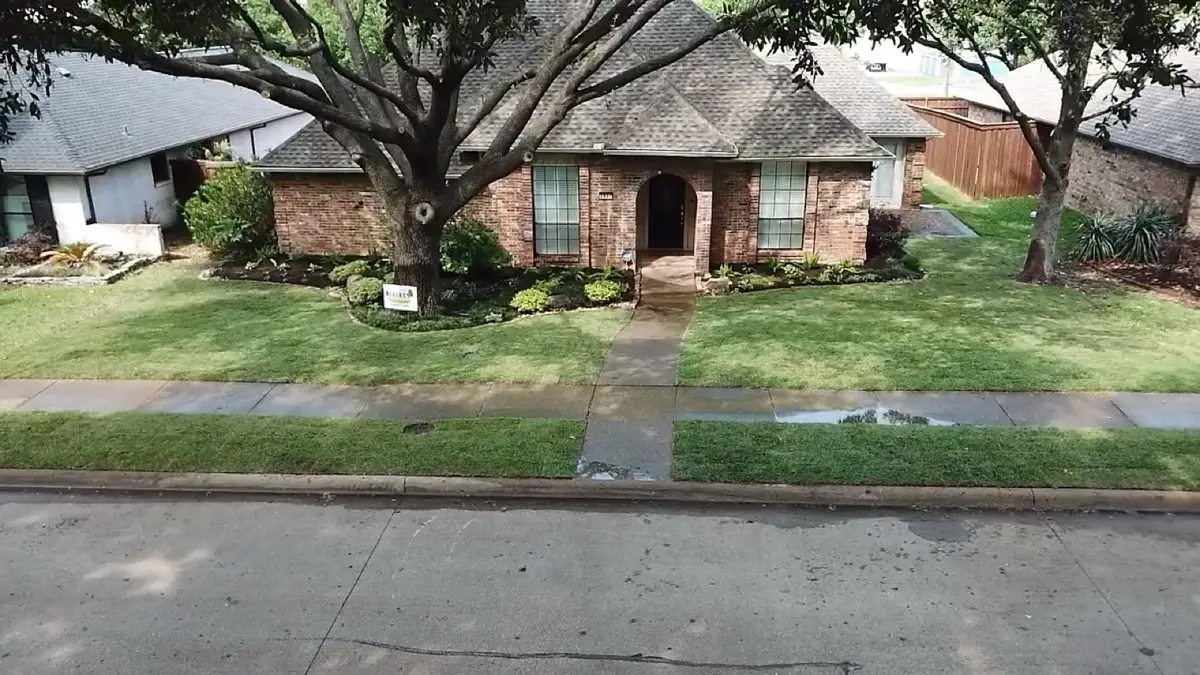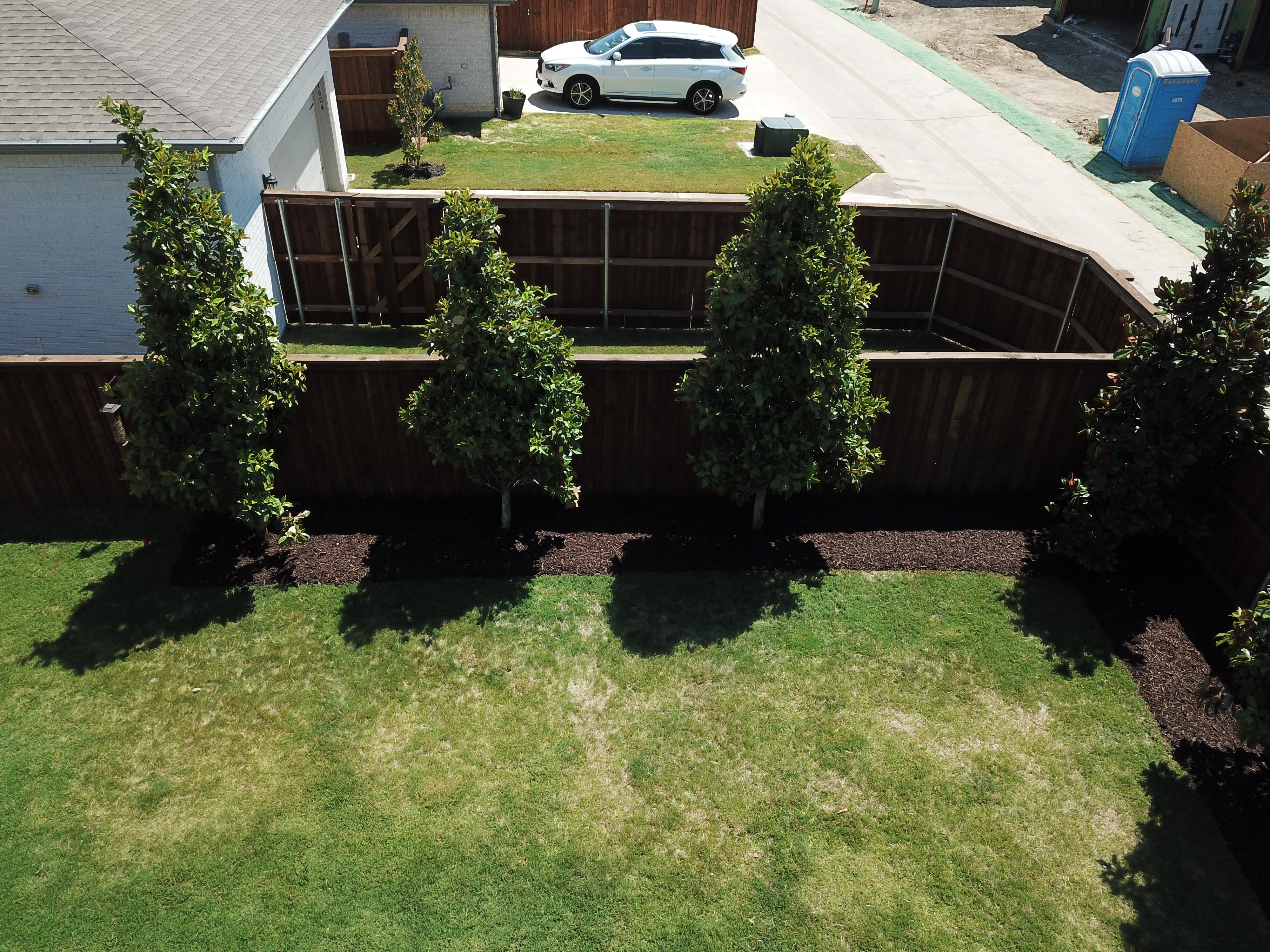
For most DFW yards, sod a vegetative zoysia such as Zeon (or Palisades) instead of seeding Zenith. Zenith is a coarse-textured Zoysia japonica that is sold as seed, and university extension guides describe zoysia from seed as slow and hard to establish. Zeon is a fine-textured, dark green zoysia that Texas A&M AgriLife lists as a sod-propagated cultivar, so you plant it as sod or plugs. Sod covers the ground with grass on install day, while seeded zoysia can take a long time to fill in. New sod still has to root into the soil, so keep foot traffic light until it does.
Seed only makes sense for a large, open, low-traffic area where you can keep the soil moist for weeks and you don't mind waiting. For a front yard or a backyard you actually use, sod is the better call. The rest of this post explains why, and what to check before you buy either one.
Zeon and Zenith are two different grasses
The names look alike, and that's where a lot of the confusion starts. They aren't related products.
- Zeon is a fine-bladed zoysia. Texas A&M AgriLife's turfgrass program lists it as a Zoysia japonica x Zoysia matrella cross, propagated by sod. University of Florida IFAS groups it with the fine-textured, dark green Manilagrass (Z. matrella) types and notes good shade tolerance and mowing heights from about half an inch to two inches.
- Zenith is a Zoysia japonica. Texas A&M AgriLife lists it as available as seed or sod, and UF IFAS describes it as a coarse-textured, seeded cultivar.
So "Zeon vs Zenith" is really two questions at once: fine blade or coarse blade, and sod or seed.
Can you buy Zeon as seed?
You'll see online listings and searches for "Zeon zoysia seed." Texas A&M AgriLife lists Zeon as a sod cultivar, and Clemson's Home & Garden Information Center notes that Zoysia japonica is the only zoysia species with seed commercially available. If a bag says zoysia seed, read the label for the actual variety before assuming it will grow into a Zeon lawn.
Why zoysia seed is a slow start in North Texas
Zoysia is a slow-growing grass. Clemson describes zoysia establishment from seed as "difficult and time consuming" and calls sodding the preferred method of establishment. UF IFAS goes further, noting that seeded zoysias generally don't perform as well as the vegetative (sod and plug) cultivars.
In a DFW yard, that slow start runs into three local problems:
- Watering limits. Seed has to stay evenly moist until it germinates and roots, and most DFW cities limit how often you can run sprinklers. Check your city's rules, including any establishment allowance for new turf, before you seed.
- Weeds and storms. Bare clay between seedlings is open ground for weeds, and a hard spring storm can wash seed into low spots.
- Clay and slope. Houston Black clay crusts over when it dries. Seed sitting on a sealed, unprepped surface struggles no matter which variety you choose.
We cover the broader sod, seed and hydroseed trade-offs in Sod vs Seed vs Hydroseed in North Texas. This post is just about the zoysia version of that decision.
When seeding Zenith can make sense
Seed can be reasonable when:
- The area is large and open, such as acreage or a side lot, and sodding all of it isn't practical.
- You can water consistently through germination and the first season.
- Nobody needs to walk, play or run a dog on it for a while.
- You're comfortable with a coarser blade. Zenith won't look like Zeon.
If that's your situation, plant in the warm season, prepare and loosen the soil first, and expect it to take a long time to fill in.
When sod is the better call
For most homes in Carrollton, Plano, Frisco and the rest of the area, sod wins:
- You want green coverage right away instead of bare soil while seed fills in.
- The yard will get regular traffic once it's established. Keep kids, pets and parties off new sod until it has rooted.
- There's partial shade, where a fine zoysia like Zeon tends to hold better than Bermuda.
- An HOA expects full grass coverage soon after a remodel or a dead-grass notice.
Sod also lets you pick the exact cultivar. With seed you're limited to what's sold as seed.
What to know about Zeon before you choose it
Zeon is a showcase grass with real trade-offs. Texas A&M AgriLife notes that finer-textured zoysias can have shallower roots and less drought hardiness than the coarser types, and that low mowing heights often need a reel mower. Both universities list large patch as a disease to watch. Our full breakdown is in Is Zeon Zoysia Right for a DFW Lawn?, and the head-to-head with the zoysia we install most is in Zeon vs Palisades Zoysia.
What we install
Our everyday sod is Bermuda, Palisades Zoysia and St. Augustine, laid on a graded, prepped clay base. Zeon is a premium specialty sod: we can quote it on request after confirming what the farms actually have that season. If seed really is the better fit for a big open area, we'll say so during the walkthrough.
Timing matters as much as grass choice. See the best time to lay sod in North Texas before you schedule.
Sources
- Texas A&M AgriLife Extension, AggieTurf: Zoysiagrass (cultivar parentage, propagation, strengths and weaknesses)
- University of Florida IFAS Extension: Zoysiagrass for Florida Lawns (ENH11/LH011) (Zenith and Zeon cultivar notes; last revised 2011)
- Clemson Cooperative Extension Home & Garden Information Center: Zoysiagrass (seed availability and establishment)
Get a straight answer for your yard
If you're deciding between a seeded zoysia and a sod lawn, we'll walk the yard, check the light and the clay, and tell you which grass fits and what it will take. Request a free on-site sod estimate. We quote after measuring, because prep and access move the price more than anything else.
This article is part of The Complete Guide to Sod Installation in DFW.