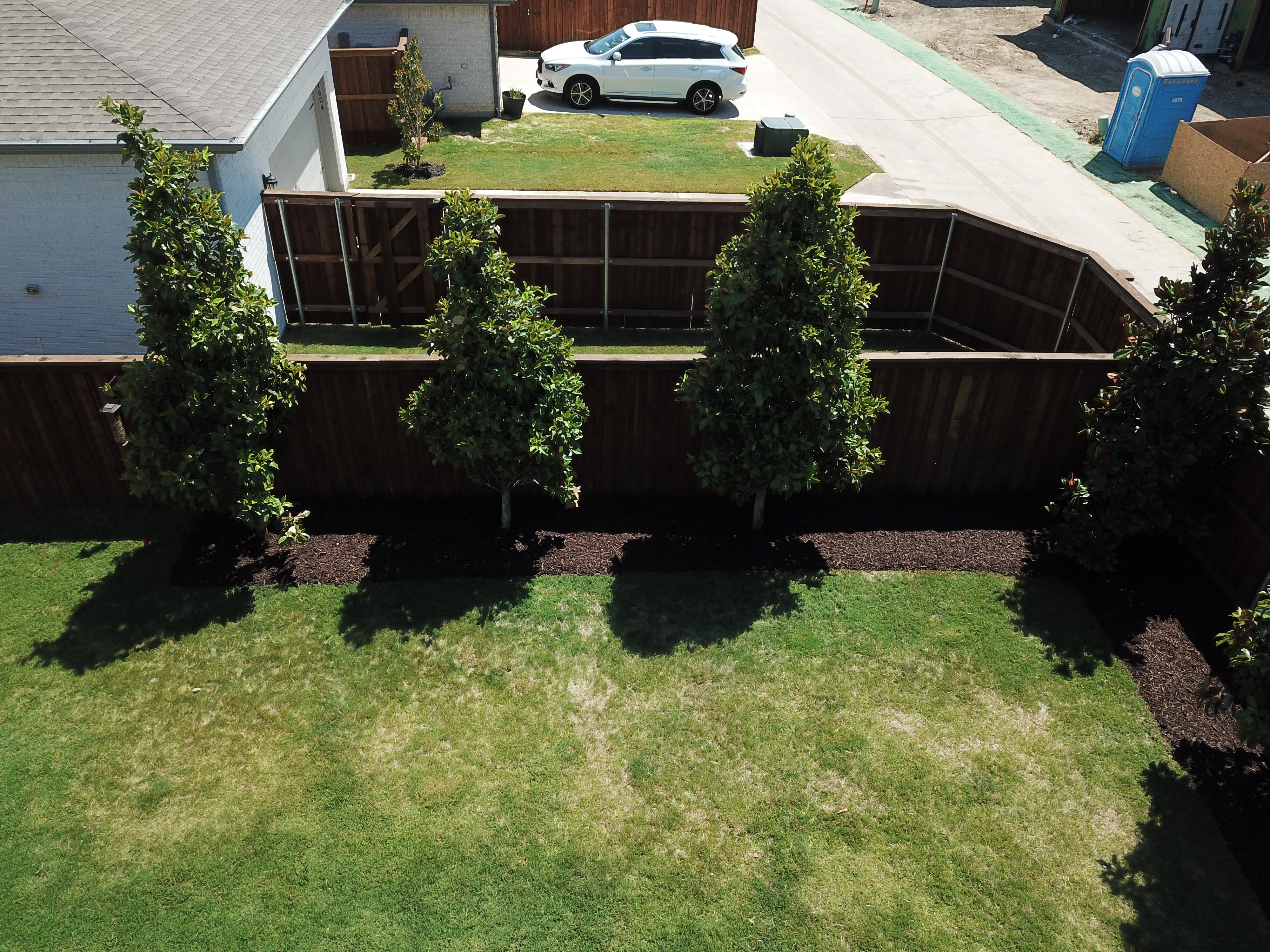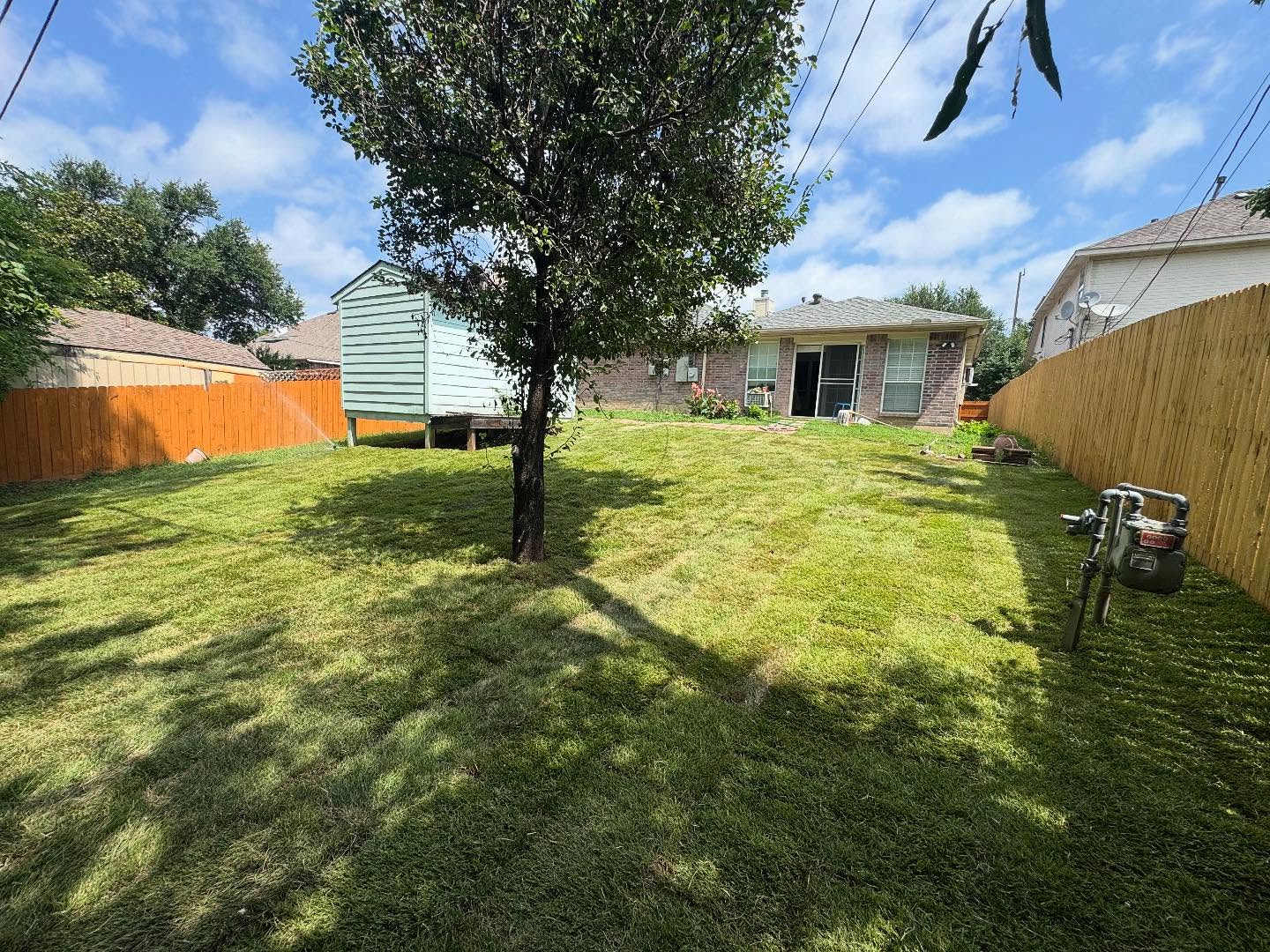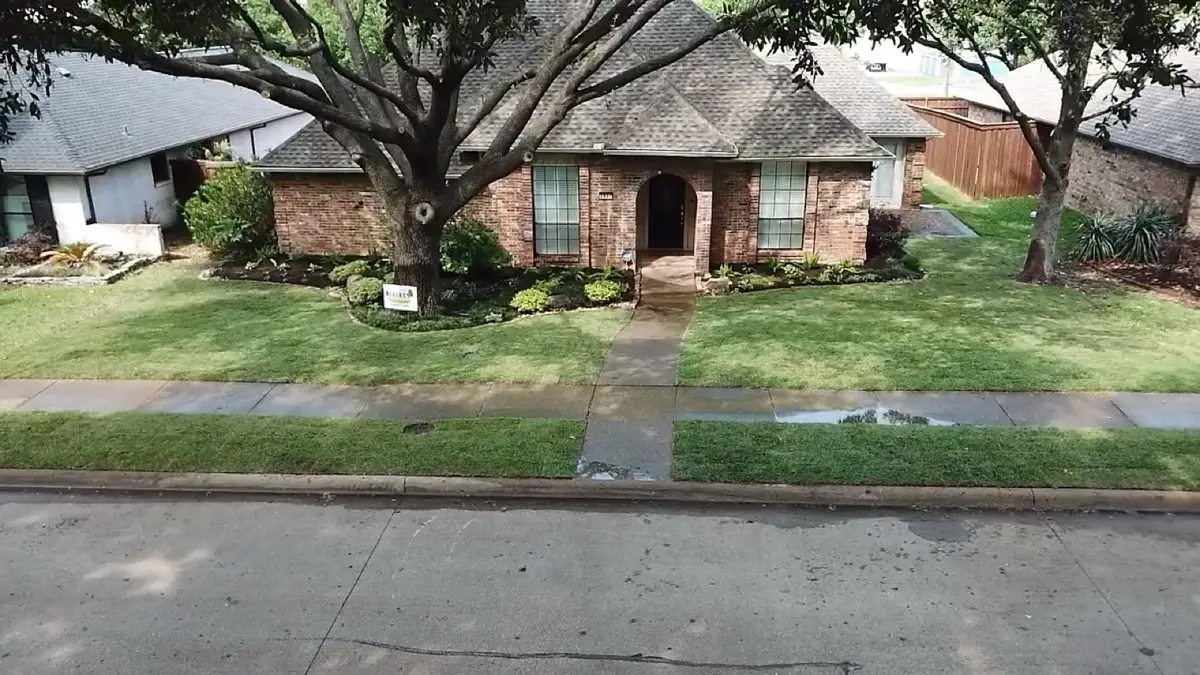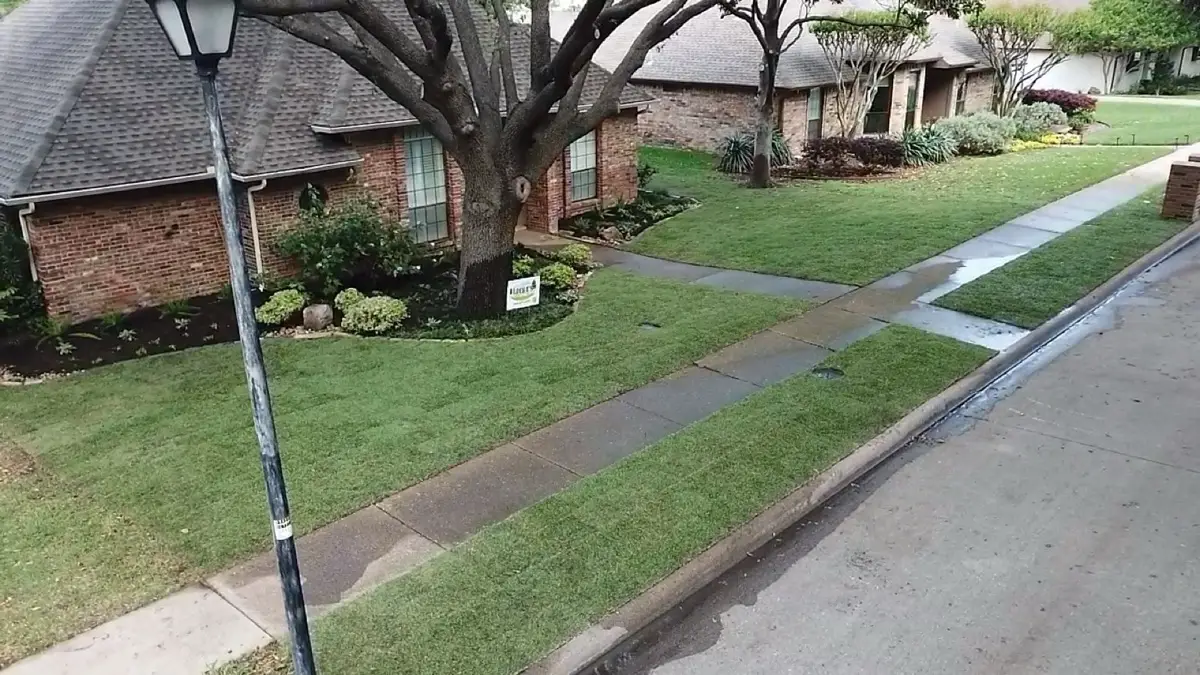
For most North Texas yards, yes. Palisades Zoysia is the best all-around grass for DFW because it takes the part shade that thins out Bermuda, uses less water than St. Augustine on the twice-a-week summer schedule most cities allow, comes back after a hard freeze, and stands up to kids and dogs on Blackland Prairie clay. It is the zoysia we install most, and it is one of the three grasses on our sod page alongside Bermuda and St. Augustine.
It is not the best grass for every yard. A wide-open, full-sun lot on a tight budget is still Bermuda territory, and a backyard under a thick pecan canopy is still St. Augustine territory. But the typical Carrollton, Plano, or Frisco lot is a mix: sun out front, shade along the fence, a dog, a swing set. That mix is exactly what Palisades was selected for. Here is what it is and how it behaves once it is rooted.
What Palisades Zoysia actually is
Palisades is a Zoysia japonica, the wider-bladed branch of the zoysia family, released by the Texas A&M turf program in the 1990s and selected for Texas heat, Texas cold, and Texas soil. The blade is medium to wide, the color is a rich medium green, and the mat is dense and soft underfoot.
The fine-bladed zoysias like Zeon and Emerald are Zoysia matrella. They look like a putting green and ask for putting-green care. Palisades is the everyday zoysia: it gives you most of that plush feel with a rotary mower and a normal weekend. We compared the two side by side in Zeon vs Palisades.
Look and feel
A Palisades lawn reads as lush and full from the street, and it feels thick and springy on bare feet. Because the blade is wider, it hides things a fine grass would show: a slightly uneven mow, a scuffed corner where the dog turns, a sprinkler head that throws a little short. Homeowners who walk both usually pick Palisades once they understand that forgiveness is the whole point.
Sun and shade
Palisades wants about four to six hours of direct sun and handles filtered light under a live oak better than any Bermuda. That is the single biggest reason DFW homeowners move to zoysia: Bermuda goes patchy in the shade, and Palisades holds.
It is not a deep-shade grass. If a spot gets only a couple hours of real sun, the honest answer is St. Augustine or a bed, and our best grass for shade in North Texas post explains how to measure your own light before you order.
Water on a twice-a-week schedule
Most of the metro runs two assigned watering days a week in summer, and Palisades is comfortable on that once it is established. It roots deep on prepped soil, slows down and goes slightly off-color in a dry August stretch, and greens right back up when water returns. It uses noticeably less water than St. Augustine and about the same as Bermuda.
The first 30 days are the exception. New sod needs several short cycles a day for the first two weeks, then a taper, and we leave a printed watering schedule after every install. That plan, and why it matters more than the cultivar, is in our complete guide to sod installation in DFW.
Mowing height and upkeep
Mow Palisades at about one and a half to two and a half inches with a standard rotary mower. It grows at a moderate pace, so it needs cutting less often than Bermuda, and it tolerates being mowed a touch tall, which is what you want going into a hot spell. Keep the blade sharp, because zoysia blades are tougher than they look and a dull mower frays them.
It builds thatch more slowly than the fine zoysias, so an aeration every year or two is enough for most yards. Go easy on nitrogen. Zoysia does not need to be pushed.
Blackland Prairie clay
The soil under most of DFW is Houston Black clay, which swells when it rains and cracks when it does not. Palisades tolerates clay well, but only when the yard is graded so water moves and the surface is loosened before the sod goes down. Sod laid on unprepped hardpan never roots right no matter which grass it is, which is why every install we do starts with grading and prep.
Drainage also matters for large patch, the one disease to know with any zoysia here. It shows up as tan circles in fall and spring when the soil is warm, nights are cool, and the ground stays wet. Good grading and morning-only watering prevent most of it.
Wear and recovery
Palisades takes a family, a dog or two, and a rough weekend of backyard football, and the wide blade hides the evidence. Where it trails Bermuda is recovery. Zoysia spreads slower, so a worn dog path fills in over a season rather than a month. We lay it tight from the start so there are no gaps to fill, and it thickens into a weed-choking mat by the end of the first full summer.
Cold, freezes, and dormancy
Palisades goes tan and dormant after the first hard frost and greens up again in spring, the same as Bermuda. That is a feature. DFW sits at the northern edge of where St. Augustine can be grown at all, and a multi-day hard freeze can kill St. Augustine outright. Palisades handles our cold snaps with far less drama, which is a big part of why it is our default zoysia.
Palisades vs Bermuda
Bermuda is the North Texas workhorse: fast, tough, affordable, and happiest in six or more hours of full sun. It also needs that sun, grows fast enough to want a short cut every week, and thins out the moment a tree gets big.
Palisades costs more, establishes slower, and repairs itself slower. In exchange you mow less, you get a softer lawn, and you keep grass along the shady side of the house that Bermuda would give up on. If your whole yard bakes all day and budget is the priority, Bermuda is the right call. If any of it is shaded, or you want the plush feel, Palisades is. The full three-way comparison is in Bermuda vs Zoysia vs St. Augustine.
Palisades vs St. Augustine
St. Augustine is the best true-shade grass we can grow here, and under about four hours of sun it is the only one of the two that will live. That is the whole argument for it.
Everywhere else, Palisades is easier. St. Augustine is the thirstiest of the three grasses we install and lives right at its limit on two watering days in August. It gets chinch bugs, brown patch, and take-all root rot, and it is the most freeze-sensitive. Palisades essentially does not get chinch bugs, uses less water, and survives the cold. We went deep on that pairing in Zoysia vs St. Augustine.
Honest downsides
- It costs more than Bermuda.
- It establishes and repairs slower than Bermuda, so damaged spots stay thin longer.
- It is not a deep-shade grass, whatever the bag says.
- It gets large patch if the yard drains poorly or gets watered at night.
- It is installed as sod only. You cannot seed it.
Why it is our default zoysia
We install more Palisades than any other zoysia because it fits how most DFW families actually live: kids and dogs on the grass, a sprinkler system on a city schedule, some shade, and nobody wanting a second job keeping the yard alive. It is the grass we can put down in Plano, Frisco, Coppell, or Carrollton and feel good about when we drive past two summers later.
Get a straight answer on your yard
The right grass comes down to your sun, your drainage, and how you use the yard, and that is a short conversation standing in it. We come out, watch the light, check the clay, and tell you whether Palisades fits or whether the sunny front wants Bermuda and the shaded back wants St. Augustine. Start with a free on-site estimate for sod installation, usually within 48 hours.
This article is part of The Complete Guide to Sod Installation in DFW.