Yes, if you want the finest, softest lawn we can grow in North Texas and you are willing to keep up with it. Zeon Zoysia is a fine-bladed zoysia that takes part shade better than Bermuda, can usually be managed on a twice-a-week summer watering schedule once it is rooted (adjusted for heat, soil and sun), and does well on Blackland Prairie clay as long as the yard is graded and prepped first. The catch is that it costs more than Palisades or Bermuda, it recovers slowly from damage, and its putting-green surface shows every missed mow.
That is the short answer. Below is the longer one, from a crew that lays a lot of zoysia around Carrollton, Plano, and Frisco and hears how it went a year later. We already compared the two zoysias head to head in Zeon vs Palisades. This post is about Zeon on its own, and how it stacks up against Emerald, Empire, and Trinity.
What Zeon Zoysia actually is
Zeon is a fine-textured zoysia. Texas A&M AgriLife lists Zeon, Palisades and Empire as Zoysia japonica x Zoysia matrella crosses, and UF IFAS groups Zeon with the fine, dark green Manilagrass (Zoysia matrella) types. What you feel underfoot is blade texture: Zeon is fine and dense, while Palisades and Empire are coarser.
UF IFAS notes that Zeon and its look-alikes Geo and Zorro have good shade tolerance and are used on golf courses where shade is a concern. Texas A&M AgriLife lists Zeon as a sod cultivar, so it is planted as sod or plugs, not seed. If you are weighing it against a seeded zoysia, see Zeon or Zenith Zoysia: Should a DFW Yard Be Sodded or Seeded?.
Look and feel
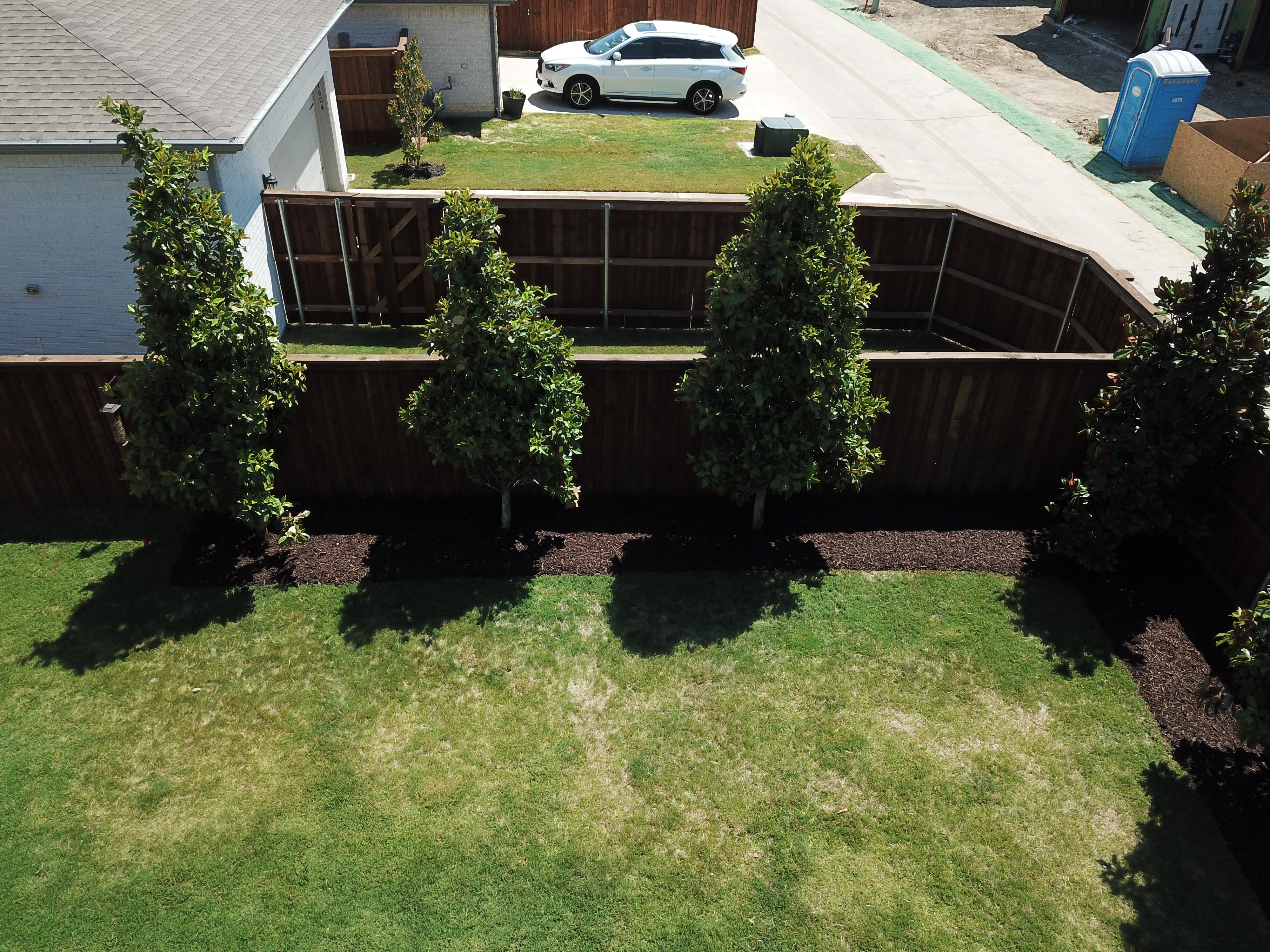
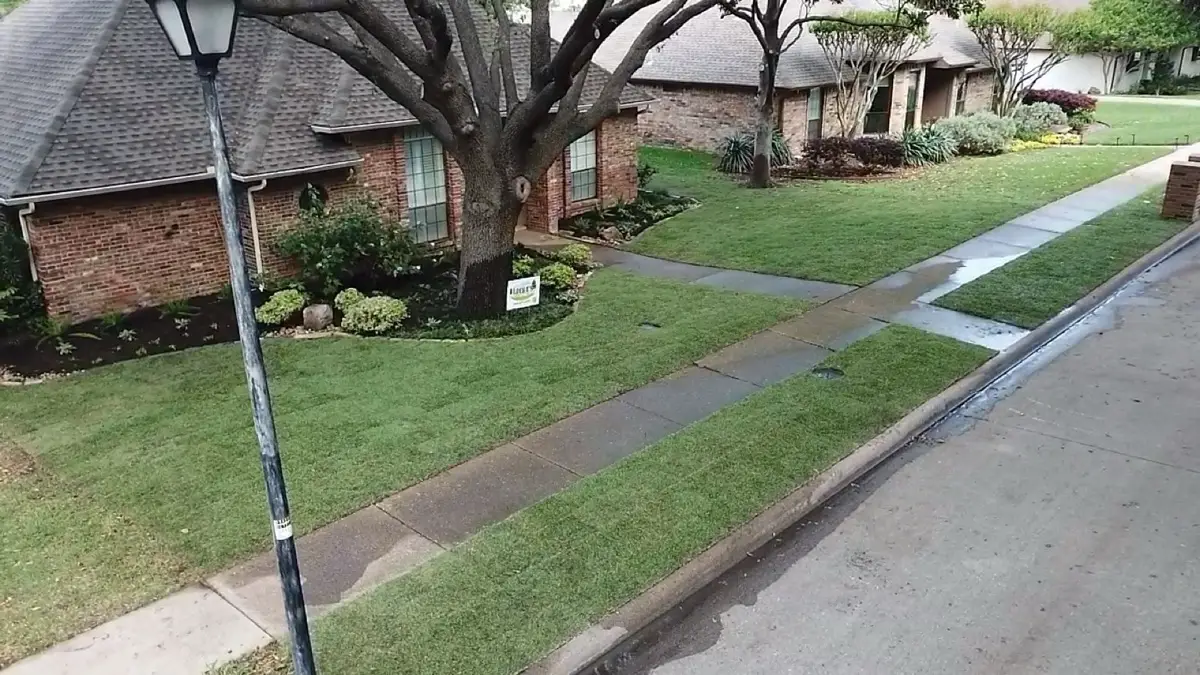
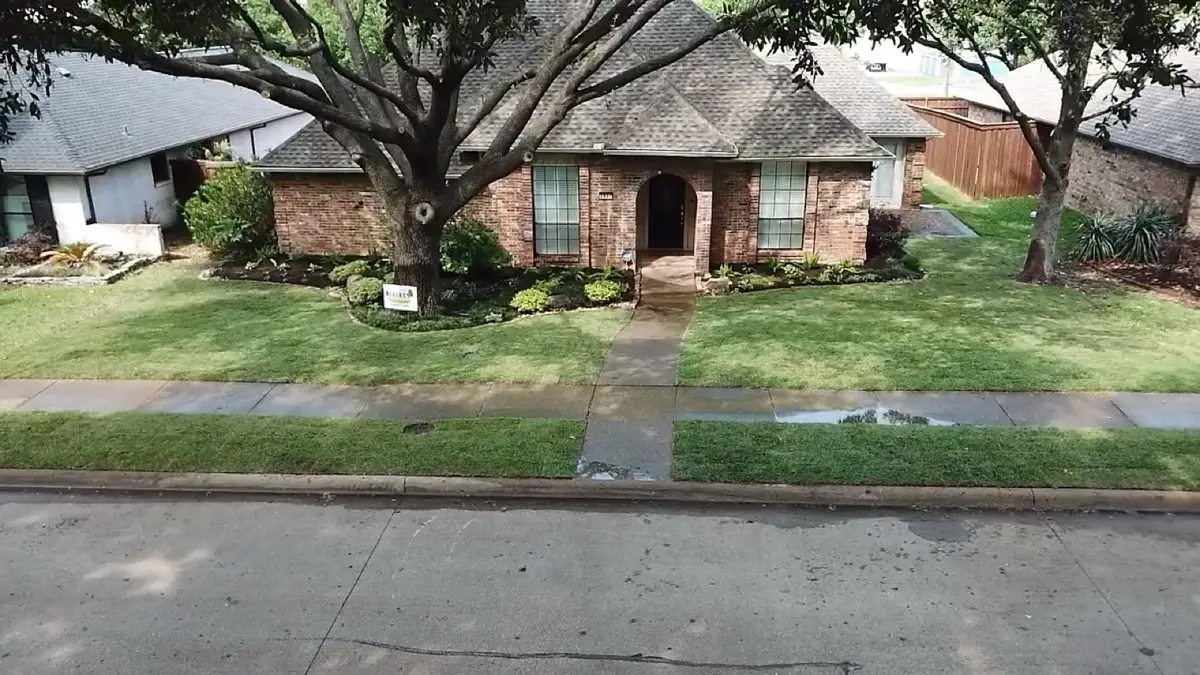
A well-kept Zeon lawn is dark green, dense, and soft enough that it reads as carpet. The blades are thin and lie tight, so the lawn looks uniform from the street and feels cool on bare feet in July.
The same fineness is what makes it demanding. A wide-bladed grass hides an uneven mow and a scuffed corner. Zeon does not. Skip a week in June and the top gets puffy, then the next mow scalps it brown in patches. If you want the lawn to disappear into the background, it is the wrong grass.
Sun and shade in a North Texas yard
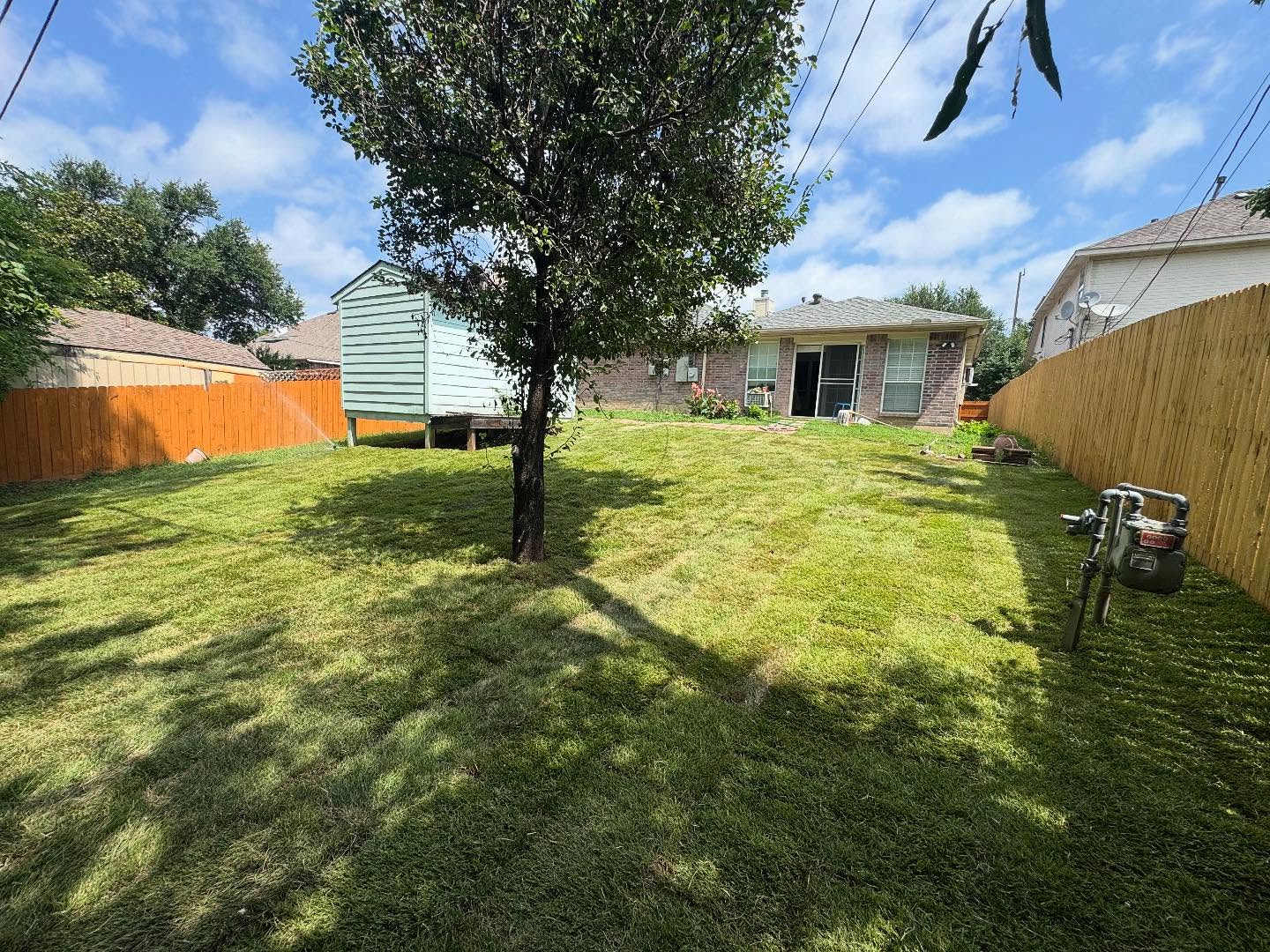
Zeon still needs a good share of direct sun to stay dense, and it handles filtered light under a live oak or pecan better than Bermuda and a touch better than Palisades. That makes it a real option for the sun-and-shade mix on most established Carrollton and northwest Dallas lots.
It is not a deep-shade grass. Under a thick canopy that gets a couple hours of real sun, no zoysia stays thick, and St. Augustine is the honest answer. Our best grass for shade in North Texas post walks through how to read your own light before you order sod.
Water: the twice-a-week reality
Most DFW cities cap summer irrigation at two assigned days a week, so a grass has to cope with that schedule once it is established. Texas A&M AgriLife notes that the finer-textured zoysias can root shallower and be less drought hardy than the coarse types, so Zeon leans on a well-prepped soil profile. Once rooted, it slows down and goes slightly off-color in a dry stretch, and greens back up when water returns instead of dying out the way St. Augustine can.
The first month is different. New sod needs several short cycles a day for the first two weeks, then a taper, and that plan is in our complete guide to sod installation in DFW. After that, water to the weather, the soil and the slope rather than a fixed rule. Too much water is a problem too: wet, poorly drained clay feeds large patch.
Mowing height and upkeep
Zeon looks its best cut low, in the neighborhood of one inch, which usually means a reel mower and a steady weekly schedule during the growing season. You can run a sharp rotary mower at one and a half to two inches and it will still look good, just not putting-green good.
Because the blades are fine and dense, matrella zoysias build thatch faster than the japonica types. Plan on dethatching or core aeration every year or two, and go easy on nitrogen, since overfeeding makes the thatch worse, not the color better.
Blackland Prairie clay and drainage
The soil under most of DFW is Houston Black clay, the heavy, shrink-swell stuff of the Blackland Prairie. It holds water when it rains and cracks open when it does not. Zeon can root in it, but only if the yard is graded so water moves and the surface is loosened before the sod goes down. Sod laid flat on hardpan sits there like a rug, and no cultivar fixes that.
The clay also matters for large patch, the one fungus every zoysia owner in North Texas should know. It shows up as tan circles in fall and spring when the soil is warm, the nights are cool, and the ground stays wet. Poor drainage feeds it. Grading at install and morning-only watering prevent most of it.
Wear and recovery
Zeon is dense enough to take normal family traffic, and a dense matrella lawn resists weeds well because there is nowhere for them to land. Where it falls behind Bermuda and Palisades is recovery. Zoysia spreads slowly (Texas A&M AgriLife lists slow recovery as a zoysia weakness), so a dog path or the spot where a trampoline sat stays thin for a season instead of filling in by August. If your backyard is a soccer field and a dog run, that is a real cost. If it is a front yard, it is not.
Cost relative to Palisades and Bermuda
Zoysia costs more than Bermuda, and Zeon sits at the top of the zoysia range as a specialty sod. Full-yard sod installs around DFW generally run from about $1,200 to $14,000 depending on size, grass, and prep, and Zeon lands at the higher end of that for the grass itself. We quote it after a free on-site measure, because availability changes by season and prep is what moves the number most.
Honest downsides
- It is the most expensive grass on this page.
- It needs a reel mower and a weekly cut to look the way you are picturing.
- It builds thatch and needs periodic dethatching.
- It recovers slowly from pet damage, ruts, and heavy play.
- It shows scalping, missed mows, and irrigation gaps that a coarser grass would hide.
None of those are reasons not to plant it. They are reasons to plant it on purpose.
Zeon vs Emerald vs Empire vs Trinity
Zeon vs Emerald Zoysia. Emerald is the older fine-bladed zoysia, a Zoysia japonica x Zoysia pacifica hybrid developed in Tifton, Georgia, and released in 1955. UF IFAS describes it as resembling Zeon and the other Manilagrass types in color, texture, density and disease issues, with better winter hardiness and wider adaptation. Both make fine, dense, slow-recovering lawns that build thatch. In a given season, what the sod farms actually have usually decides between them, and we will tell you what we can get.
Zeon vs Empire Zoysia. Empire is a coarse-textured zoysia. UF IFAS describes it as dense, quick to establish, and good in both sandy and clay soils, and notes it is susceptible to large patch. It belongs in the same conversation as Palisades, not Zeon. It is tough, forgiving, and easy to mow with a rotary, with a coarser look that hides wear. If you are choosing between Zeon and Empire, you are really choosing between a fine showcase lawn and a durable everyday lawn, and that is the same decision we walk through in Zeon vs Palisades.
Trinity Zoysia vs Zeon Zoysia. Trinity is another fine-bladed Zoysia matrella marketed for drought tolerance, shade tolerance, and dark color, and in a yard the two look and behave more alike than different. Both want low mowing, both build thatch, and both are premium sods. Farm availability usually decides it in a given season, and we will tell you which one we can actually get.
Who should plant Zeon in DFW
Plant Zeon if the lawn is the centerpiece, the yard gets solid sun for part of the day, and you enjoy dialing in a flawless surface with a reel mower. Skip it if you have big dogs, kids who play hard, or a yard you want to mow every other week and forget. For those yards, Palisades gives you most of the zoysia look with a fraction of the fuss, and it is what we install most across Frisco, Plano, and Carrollton.
Sources
- Texas A&M AgriLife Extension, AggieTurf: Zoysiagrass
- University of Florida IFAS Extension: Zoysiagrass for Florida Lawns (ENH11/LH011), last revised 2011
- Clemson Cooperative Extension Home & Garden Information Center: Zoysiagrass
Get a straight answer on your yard
The right grass depends on your sun, your drainage, and how you use the yard. We come out, look at the light and the clay, and tell you whether Zeon fits or whether Palisades or Bermuda will make you happier for less. Start with a free on-site estimate for sod installation, usually within 48 hours.
This article is part of The Complete Guide to Sod Installation in DFW.