Beyond roofline length, five things change a Christmas lighting quote: the height and access of the roofline, how much of the scope is trees and accents rather than roof, the grade of lights and who owns them afterward, whether a service visit and January takedown are inside the price, and whether anyone measured before quoting. Two quotes on the same house can differ by hundreds of dollars and both be honest, because they are not pricing the same job. The way to compare them is to put both on the same measured scope and the same list of inclusions, then look at the number.
This post is about those exclusions and multipliers, not the per-foot rate. The rate and the roofline budget table live in what Christmas light installation costs in DFW. Read that first if you have not, then come back here to read the fine print.
Height and Access Change the Labor, Not the Footage
A tape measure says a two-story roofline in Castle Hills or Phillips Creek Ranch is 200 feet. The crew hours say something different.
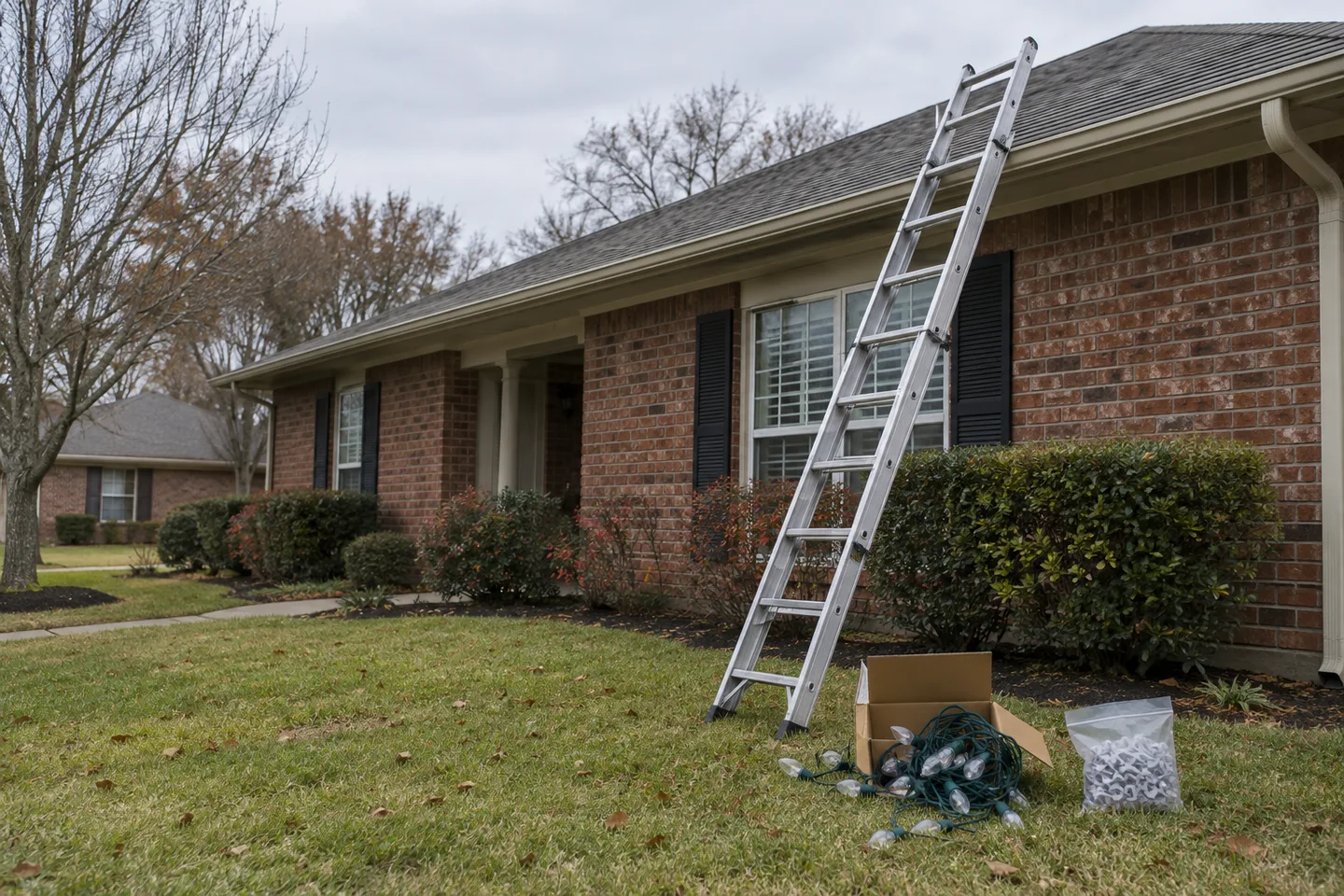
Every foot of a two-story roofline is hung off a taller ladder that gets repositioned more often, and every gable transition takes longer to keep the line straight at that height. A north wind off the prairie in late November makes the top of a 28-foot ladder a slow place to work. So the per-foot rate drifts toward the top of the $5 to $8 range on a two-story, and toward the bottom on a single-story ranch with walkable eaves.
Access matters the same way. A roofline over a steep driveway, a pool, a bed of mature hollies, or a second-story walkout deck means the ladder cannot go where the crew wants it. Installers price that time. A quote that ignores it is either going to come back higher after the install or was never measured in the first place.
What to ask: did the quote account for story count and ladder access, and is that reflected in the per-foot rate or added as a separate line?
Rooflines vs. Trees, Wreaths, and Accents
The roofline is priced per foot. Almost everything else is priced per piece, and the pieces vary more than the roof does.
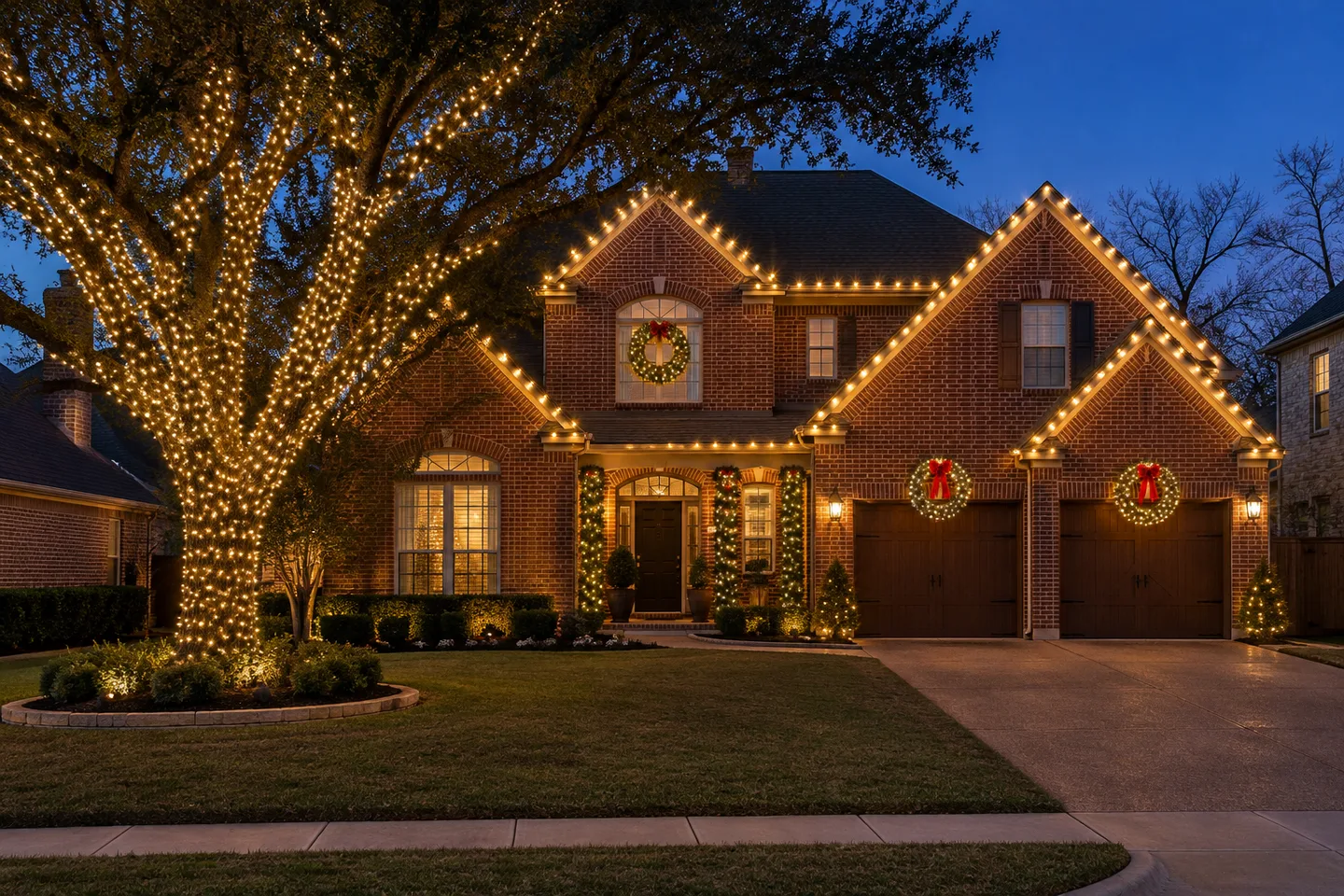
A trunk wrap on a young red oak is a modest add. A full canopy wrap on a mature live oak or pecan, the kind that lines the older streets in Carrollton and across the Park Cities, can take more material and more labor than the entire single-story roofline in front of it. Garland on porch columns, wreaths on gables and over the garage, bed wash lighting that grazes the shrubs, and pathway lights along the front walk are each a real line item.
This is where two quotes most often stop being comparable. One installer quoted the roofline and two trunk wraps. The other quoted the roofline, full canopy on the oak, garland on four columns, and two wreaths. The second number is higher because it is a bigger display, not because the second installer is more expensive.
What to ask: list every tree and accent by name in the written scope, with its own price, so the roofline portion of the two quotes can be compared on its own.
Materials and Who Owns the Lights
The product on the roof is a multiplier that hides inside the per-foot rate.
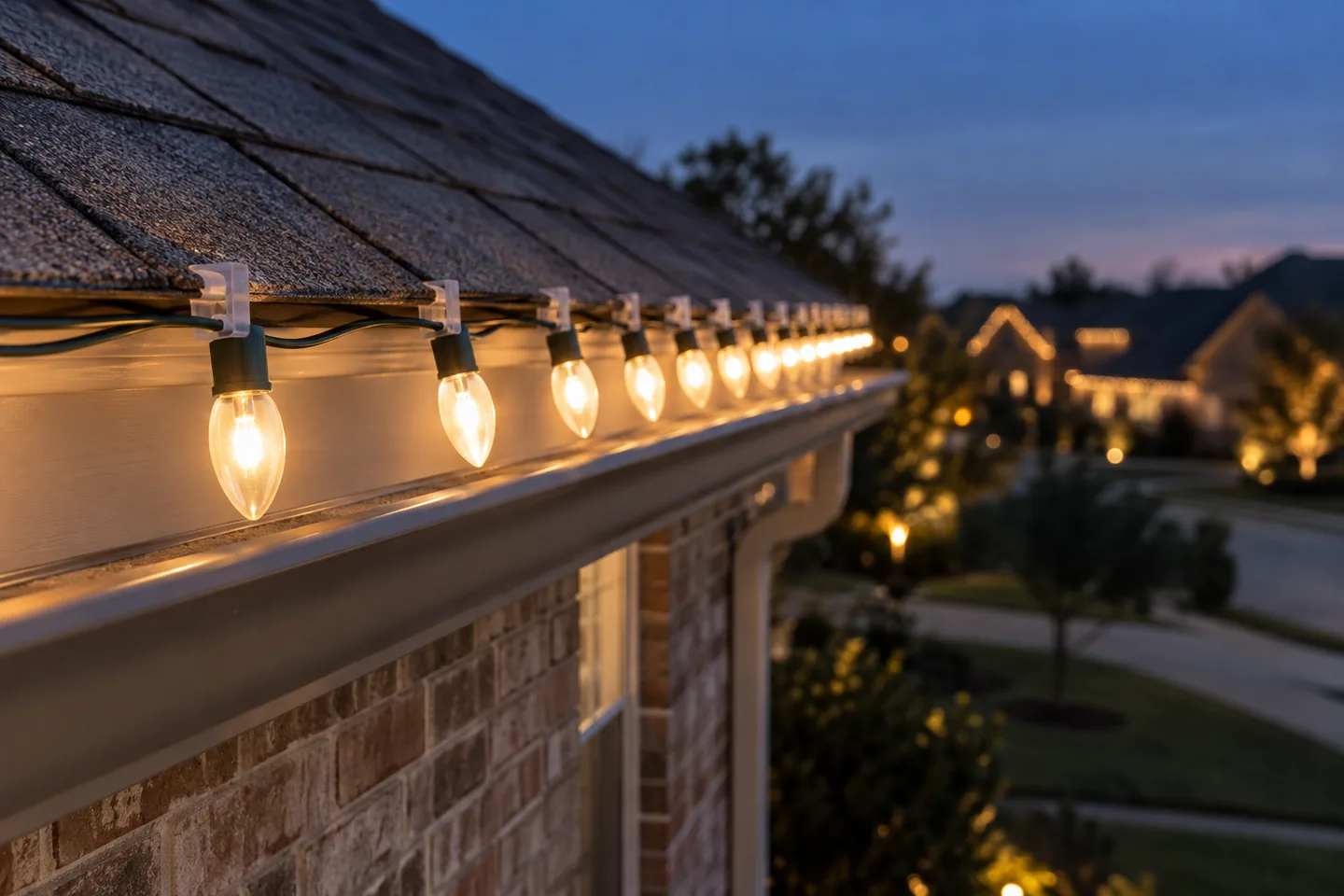
Commercial-grade LED C9 bulbs on heavier-gauge cord, hung on clips designed for the roof edge, cost more up front than boxed retail strands. They also fail far less often in the second week of December, look cleaner from the curb because there are no sagging runs between clips, and hold up for years rather than one season. A quote using retail strands can be lower per foot and still be the more expensive display across three seasons.
The ownership question is the one almost nobody asks and everyone should. After takedown, who keeps the lights?
Some installers run a lease model: a lower first-year price, the lights go back to their warehouse, and you pay again next year for the same display. Others, including us, sell the lights as part of the install. The lights, clips, and timer are yours after January takedown, and they stay at your home. We do not store them, and we do not warehouse anything between seasons. That means a smaller second-year quote for the same display, because the material is already yours and only the labor is new.
What to ask: what grade of light is on the roof, and do I own it after takedown or does it go back to the installer?
Service Visits, Storm Damage, and Takedown
Three items are either in the price or they are not, and they are the most common source of a surprise invoice.
The mid-season service visit. Strings fail. It always happens three days before people come over. One included service visit means a failed section before Christmas gets fixed without a second charge. A quote with no service visit is cheaper on paper and more expensive the first time something goes dark.
Storm damage. An ice storm or a limb coming down on the roofline is not a bulb failure, and no honest installer covers it inside the base price. Ours is re-hung as a separately quoted visit. The thing to watch for is a quote that implies everything is covered without saying what everything means.
January takedown. This is the single most common hidden line. A great November price becomes a second invoice in January, or the lights stay up until February because nobody wants to climb the ladder again. Takedown is inside our quote. Ask whether it is inside the one you are comparing.
What to ask: is one service visit included, what does it cover and not cover, and is January takedown in the number or billed separately?
How to Compare Two Quotes on the Same Scope
Put both quotes on the same page and fill in the same five lines for each:
- Measured roofline footage and the per-foot rate, with story count noted.
- Each tree and accent listed separately with its own price.
- Light grade (commercial C9 LED or retail strand) and who owns the lights after takedown.
- Service visit included or not, and whether storm damage is excluded.
- January takedown included or not.
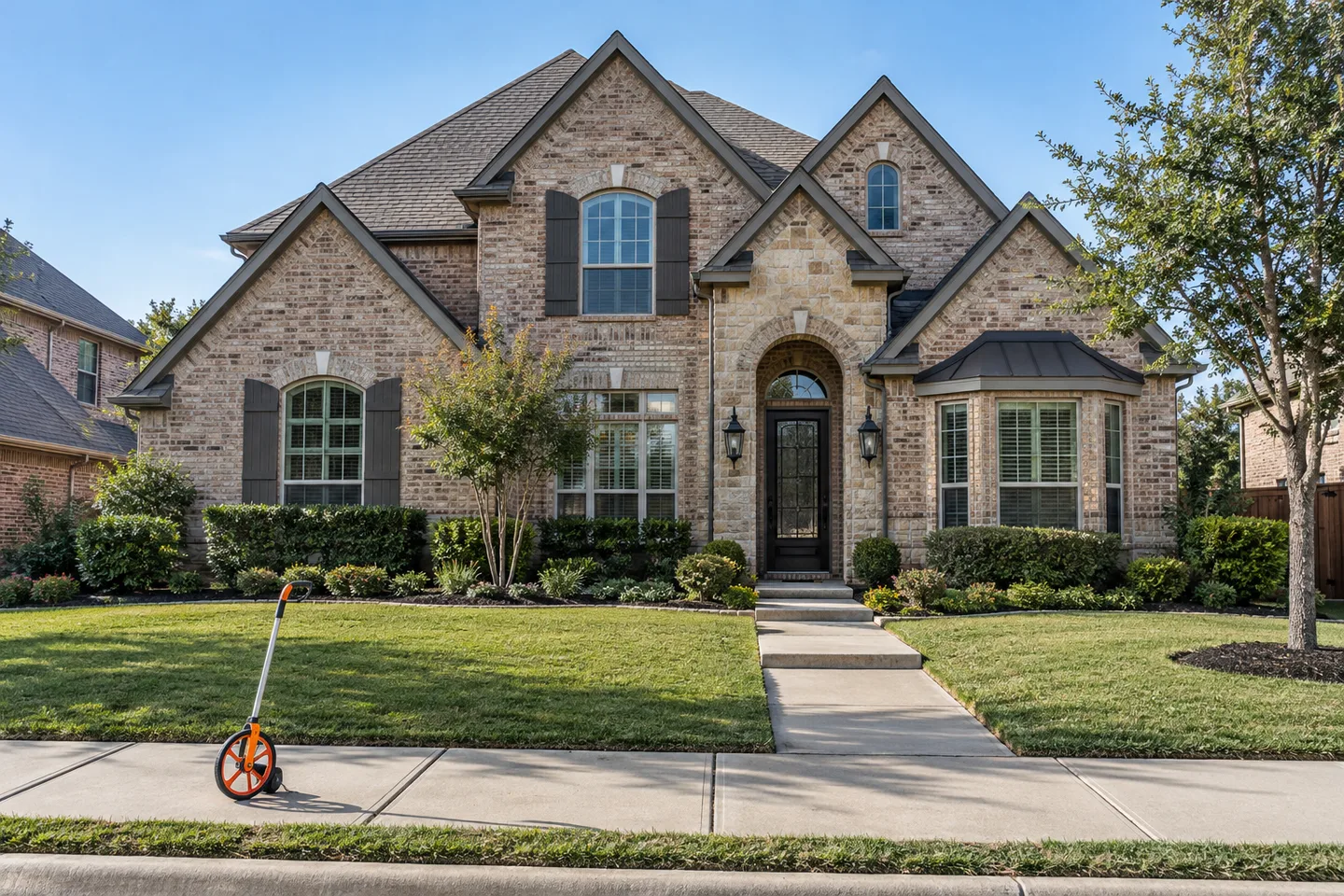
If one quote cannot fill in a line, that line is the cost difference. A quote given over the phone usually cannot fill in line one, because nobody measured. We do not quote a number before the on-site measure for exactly that reason. Our guide to measuring a roofline from the curb will get you close enough to sanity-check whichever quote arrives.
The Short Version
Roofline length sets the base. Height, access, trees, product grade, ownership, service, and takedown decide whether two quotes are even describing the same job. A higher number with all five lines filled in is often the cheaper display across two or three seasons.
Everything that goes into ours is on the Christmas light installation page, including the ranges by home type. Still deciding whether to hire it out at all? The honest answer for a DFW single-story versus a two-story is in should you hang your own Christmas lights or hire a pro. We book installs through December 15, and October fills the calendar.