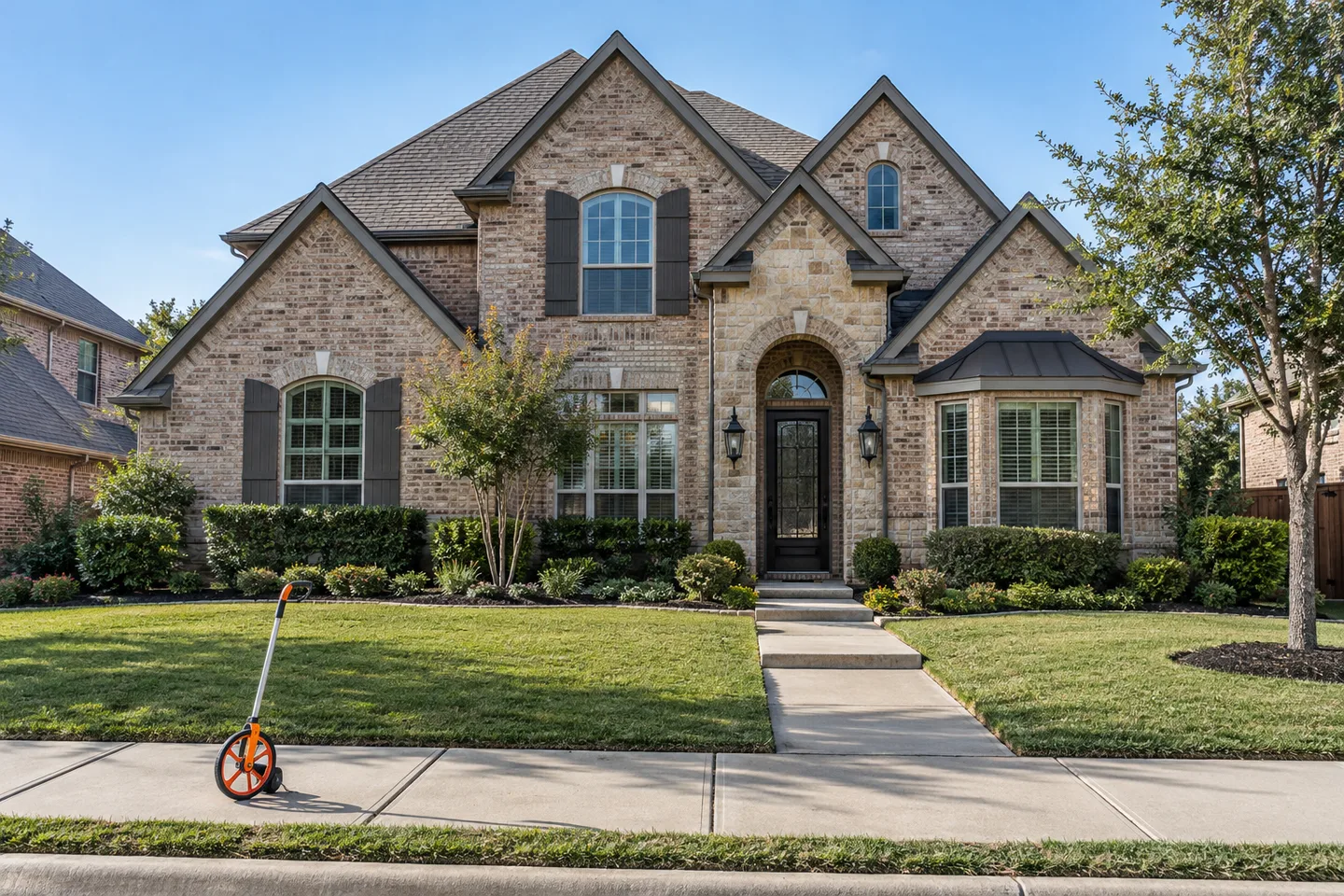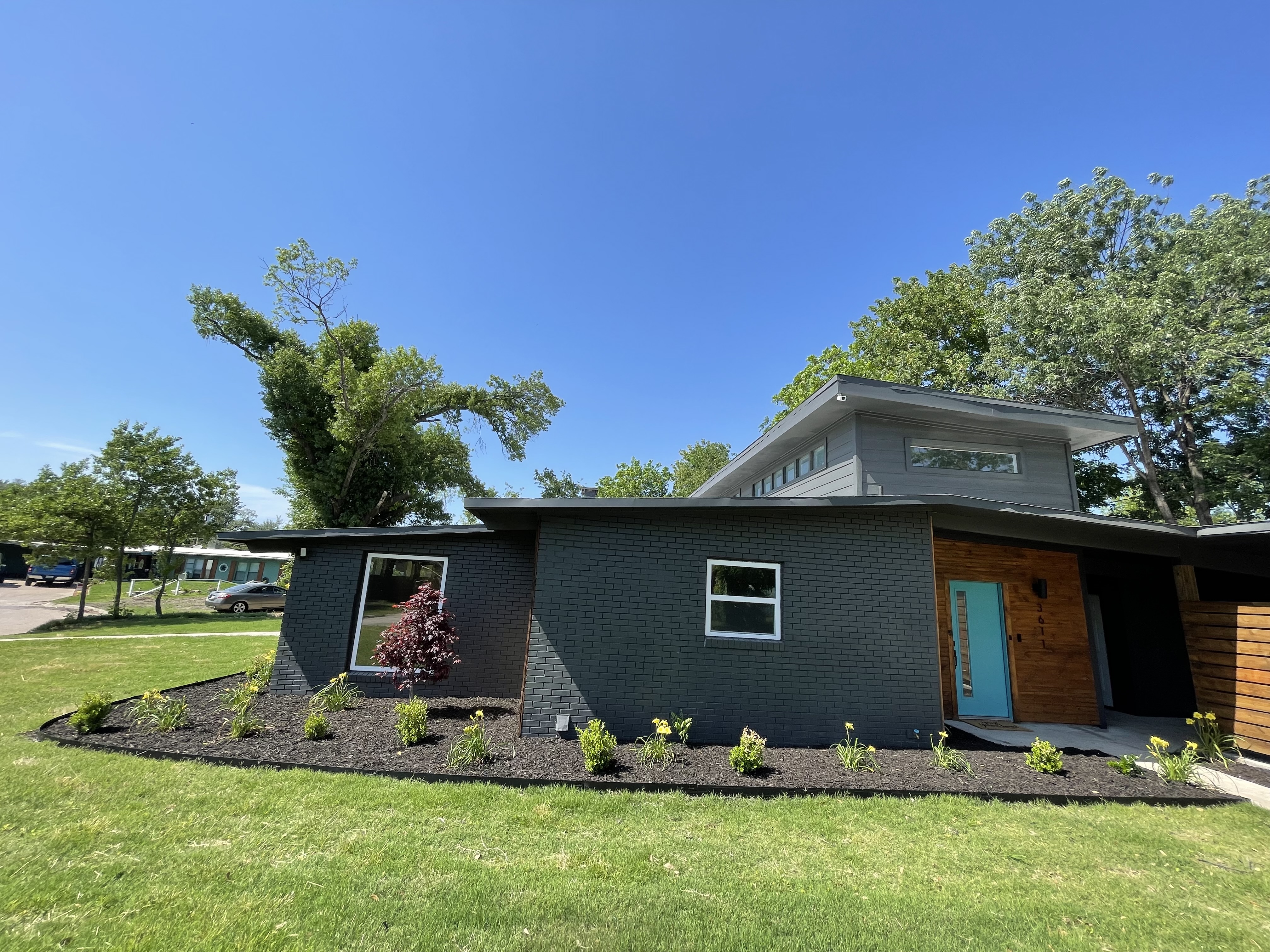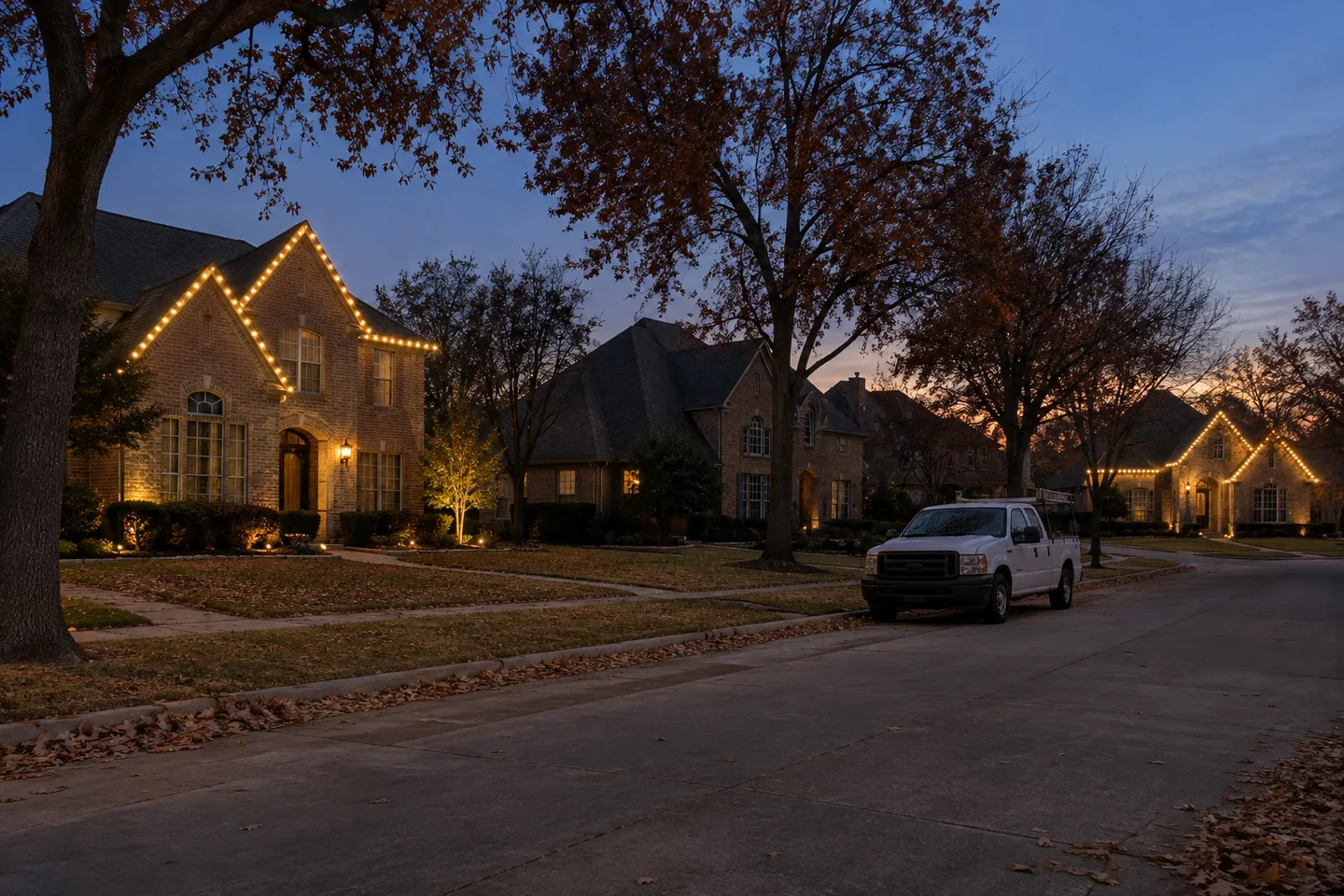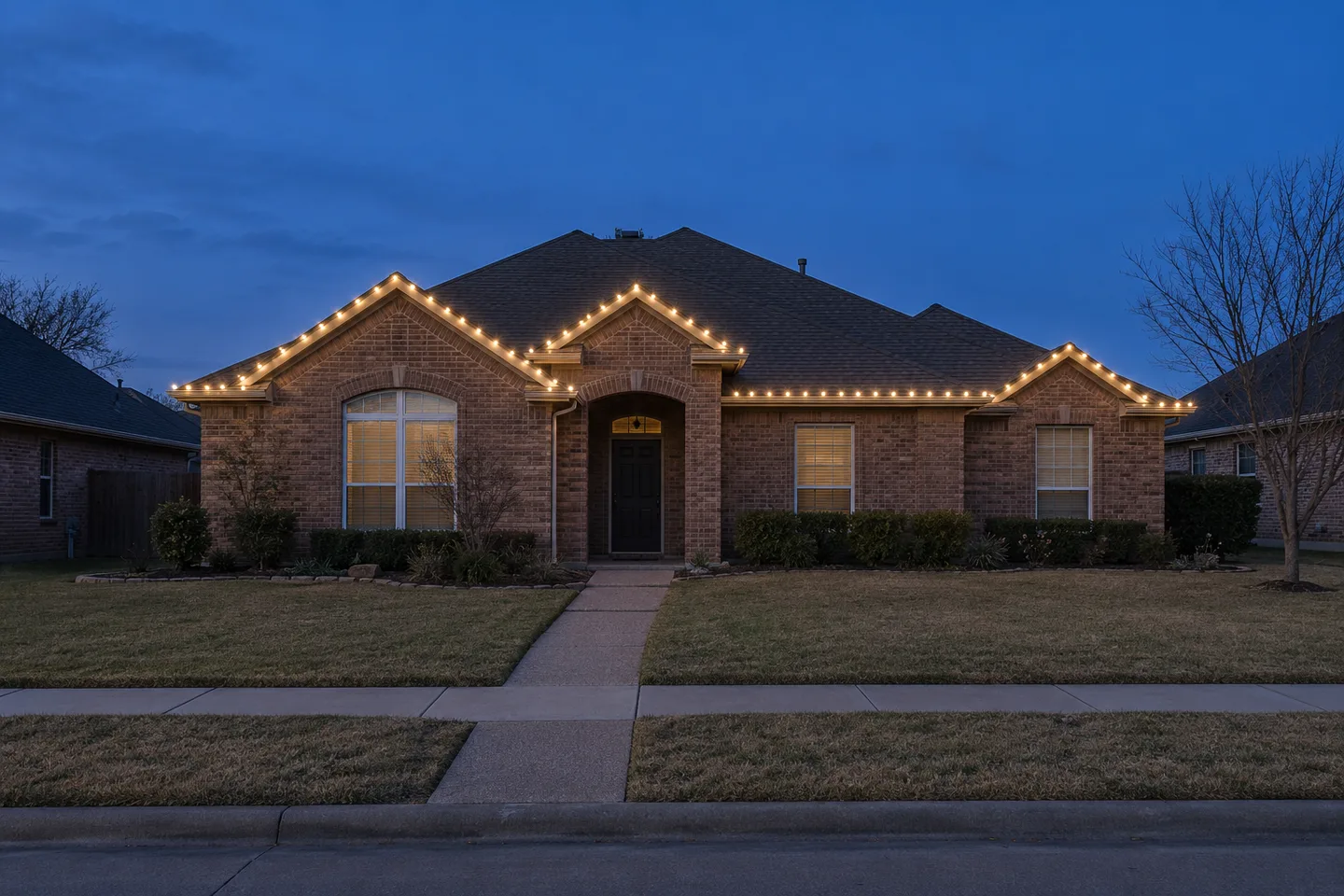
Christmas light installation from Loera's is currently estimated at approximately $5 to $8 per linear foot of roofline, which puts most rooflines between $750 and $1,600 before tree wraps and accents. The final quote depends on measured footage, height, access, and any tree wraps or accents. Omar is accepting bookings for the season; request your preferred date and we will confirm availability with your quote.
What Christmas Light Installation Costs in DFW
Use $5 to $8 per linear foot as a planning range, not a fixed offer for every house. The cost per foot, not the square footage of the house, is what sets the average cost. Most online calculators quote by square feet and story count, which is why their numbers scatter so widely: a 2,000 square foot ranch and a 2,000 square foot two-story can be 100 feet of roofline apart. These examples are simple calculations, not completed-job prices or package quotes:
| Roofline length | Illustrative roofline budget |
|---|---|
| 100 linear feet | $500 to $800 |
| 150 linear feet | $750 to $1,200 |
| 200 linear feet | $1,000 to $1,600 |
Tree wraps, columns, pathways, and other accents need their own measured scope. A roofline estimate does not automatically include an entire landscape display.
Where holiday lighting sits against every other service we price is in our DFW landscaping cost guide.
What the Price Includes, and What a Cheap Quote Leaves Out
Our number is all-in and covers five things: the design, the install, a dusk-to-dawn timer, one mid-season service visit, and January takedown. No surprise charge in January.
That list is the actual test when you are holding two quotes. A cheaper price usually means one or more of these is not in it:
- Takedown billed separately. This is the most common one. A great install price in November turns into a second invoice in January. Ask whether takedown is included or extra before you compare anything.
- No service visit. Strings fail. Bulbs die. It always happens in the second week of December. One free service visit is included with every install, so a failure before Christmas gets fixed rather than becoming your ladder problem.
- Consumer-grade product. Commercial-grade LED means heavier-gauge wire, professional bulbs, and hidden clips. The visible difference from the curb is that there are no extension cords dangling and no sagging lines between clips.
- No design walk. A quote given without anyone seeing the house is a guess, because nobody has counted the roofline or looked at the trees.
Why Rooflines, Trees, and Two-Story Homes Change the Number
Three things move the price more than anything else.
Linear feet of roofline. This is the base of the whole quote. A simple ranch with one long front line is cheap per foot. A house with multiple gables, dormers, varied pitches, and returns has far more linear feet than the curb suggests, and each transition is a place the crew has to work carefully to keep the line looking straight.
Height. A two-story roofline is not twice the work of a single-story one, it is more, because the crew is working off taller ladders, moving them more often, and taking more time per foot to stay safe. That changes the access and labor needed for the quote.
Trees. Tree wraps are priced separately from the roof, and they vary enormously. Wrapping a single trunk up to the first branches is a modest add. Wrapping a full canopy on a mature live oak or pecan, the kind that lines the older streets in Carrollton and much of inner Dallas, is a different job entirely: more material, more height, and much more labor per tree. Ask for each tree wrap to be identified in the written scope.
Beyond those, the options that show up on a design walk are garland on columns and fences, wreaths, bed wash lighting, and pathway lighting. Each is real material and real labor, so each moves the number.
What an Estate-Tier Install Costs, and Why
Estate displays need an on-site quote because the scope extends beyond the roofline.
For a full-property display you may be lighting everything, not just the roof: full canopy wraps on mature trees, garland and lighting on columns, wreaths, bed wash lighting that grazes the landscaping, and pathway lighting. Full canopy wrapping is the single biggest driver, because a mature tree can absorb more labor and material than an entire single-story roofline.
This is the common scope in the Park Cities and in University Park, where the housing stock runs larger, the trees are mature and numerous, and the whole street participates. It shows up in Southlake for the same reasons. Worth being clear though: the price follows the scope, not the zip code. An estate-tier number on a Highland Park home reflects canopy wraps and bed wash, and the same scope anywhere else on our routes prices the same way.
Plan Your Preferred Install Date Early
Straight answer: this is about availability, not a discount. We are not going to tell you the same install is cheaper in October, because it is not.
What booking early actually buys you is the date and the scope. The calendar fills in October. November is harder. If you want the lights up before Thanksgiving, which is when most people want them, book early in the fall. Install dates fill up as the season gets closer, and we take bookings through December 15. October and November bookings get first pick of December install dates.
Book in December and two things happen. The pre-Thanksgiving window is gone, and so is a chunk of the season you are paying for. And the more elaborate scopes, the ones that need a bigger crew block, are the first to become unschedulable, so late booking quietly narrows what you can even ask for. The install cost is the same. What you lose is choice.
Buying Your Own Lights vs. Hiring It Out
The honest version: if you have a single-story ranch, a comfortable relationship with a ladder, and somewhere to put the boxes, DIY is a genuinely reasonable call. Plenty of people enjoy it. We are not going to pretend otherwise.
Where it stops making sense is when you count what the all-in price is actually replacing. Doing it yourself means you own all six pieces: buying and designing the layout, the install, sourcing a timer, fixing whatever fails mid-December, taking it all down in January, and storing it for eleven months.
The three that people underestimate:
- Ladder work on a two-story roofline. This is the real one. Roofline work at that height, often in cold weather, is the part worth paying someone else to do. There is no version of the math where a fall is cheap.
- Storage and degradation. Consumer string lights and incandescent mini lights do not survive a decade in a hot Texas garage. They come out tangled, a section is dead, and you are re-buying part of the display most years. Commercial-grade LED C9 bulbs on heavy cord hold up far better season to season.
- The mid-December failure. A string goes out three days before you have people over. With an install, that is a service visit. On your own, that is you on a ladder in the dark.
If you want to see the full reservation flow and everything that can go into a design, that is on our holiday lighting page.
Getting a Real Number for Your House
Ranges are good for sanity-checking a quote. They are not a substitute for someone counting your roofline.
The way it works: we do an on-site design walk, measure the roofline, look at the trees and beds, design the scene with you, and give you a fixed quote. If it works, we reserve your install date. Install happens on the scheduled day, the mid-season service visit is included, and we take everything down in early January. The lights are yours to keep.
Omar is accepting bookings. If you want lights before Thanksgiving, ask about your preferred date now. Request a holiday-lighting estimate so we can measure the display and confirm availability.
We serve Carrollton, Coppell, and Highland Park, along with the surrounding DFW area. Start with the roofline length and the features you want lit, then request a measured quote.