You level a lawn with topsoil by spreading a thin layer of a sand-and-compost mix over actively growing grass, raking it down into the canopy so the blades still show, watering it in, and repeating in three to four weeks if low spots remain. Each pass should be under half an inch deep. On North Texas clay, do this late spring through early fall on Bermuda or Zoysia that is growing hard, and never bury the grass to fix a dip in one shot.
The details below are where the results come from: what to spread, how much, when it works, and when your yard needs grading instead.
When to level a lawn in North Texas
Topdressing only works if the grass can grow up through what you put on it. Bermuda and Zoysia grow hardest from late spring through early fall, roughly May into September in Carrollton, Plano, and Frisco, and that is the window. Grass buried in March or November just sits under the material and thins out.
Skip the worst stretch of August drought, because a heat-stressed lawn recovers slowly. And never topdress a dormant lawn, even if the timing is convenient. Brown grass cannot grow through anything.
St. Augustine can be topdressed lightly in the same window, but it spreads by surface runners, so keep the passes thinner and expect a slower fill.
Topsoil vs sand vs a sand-compost mix on Blackland clay
Most of DFW sits on Houston Black clay, the heavy Blackland Prairie soil that swells when wet, shrinks when dry, and drains slowly. What you spread on it matters.
Straight sand is the most common mistake we see. A layer of pure sand over clay does not blend in. It sits as a separate band, water moves through it fast and then stalls on the clay underneath, and the interface can pack down almost like mortar. Sand also holds no nutrients, so the grass on top of it is thirstier and hungrier than before.
Bagged or bulk "topsoil" is a gamble. Around here a lot of what sells as topsoil is screened clay with some organic matter mixed in, so you may be adding more of the heavy soil you already have, plus whatever weed seed came with it.
A sand-compost mix is what we reach for on most DFW lawns, typically two-thirds to three-quarters sand with the rest screened compost. The sand levels and drains, the compost feeds the grass and helps the layer knit into the clay instead of sitting on it. For a single deep low spot, a screened topsoil-compost blend fills more volume without the layering problem.
How deep per pass
Under half an inch per application on an existing lawn. Quarter inch is the safe number for a whole-lawn pass, and even on a low spot you should still see grass blades poking through when you are done.
If a dip is deeper than that, fill it in stages: spread a thin layer, let the grass grow through for three to four weeks, and spread again. Two or three passes over a summer fix a one-inch depression without killing the grass. Burying it in one go smothers the crown, and now you have a dead low spot instead of a live one.
For a hole deeper than about two inches, cut the sod out with a flat shovel, fill with a topsoil-compost blend, tamp it, and lay the same piece back. That is faster than topdressing it up over a season.
How to do it
- Mow low first. Cut a notch shorter than usual and bag the clippings so the material reaches the soil.
- Mark the low spots. Walk the yard after a rain or sprinkler run and flag anything that holds water or catches the mower deck.
- Spread by shovel. Toss the mix in small piles, heaviest over the dips.
- Rake it in. Use the back of a landscape rake, a leveling rake, or a drag mat to work it down into the canopy until blades show through everywhere. Broom off the sidewalks.
- Water it in. A normal watering settles the material against the soil. Then keep to the regular DFW watering schedule.
- Repeat if needed. Recheck in three to four weeks and do a second pass on anything still low.
Keep the mower off it for about a week, then mow at your normal height, not scalped.
Low spots vs the whole lawn
Most yards do not need a whole-lawn topdress. A few dips along a sprinkler trench, a sunken spot where a stump rotted, or a settled strip along the driveway is a spot job, and a couple of wheelbarrows of mix handles it.
A whole-lawn pass makes sense when the surface is bumpy everywhere, usually from years of clay heaving through wet-and-dry cycles, or when a thick thatch layer needs the compost to break it down. A level surface also mows cleaner and dries more evenly. If you are planning new sod in Carrollton, we assess grading during the installation estimate.
When it is a grading and drainage job instead
Topdressing is for surface unevenness. It is the wrong tool for these:
- Standing water a day or more after rain. That is a drainage problem, and a thin layer of sand-compost does nothing about it. The fix is a graded channel, a drain, or a river-rock bed, the way we handle a muddy side yard.
- A settled lot. Utility trenches, foundation backfill, and pool plumbing all settle over the first few years on clay. A two-to-four-inch trough needs fill and regrading, not a summer of topdressing.
- Water running toward the house. Anything moving water at the foundation is a grading job, and on Blackland clay it is worth fixing before it becomes a foundation repair.
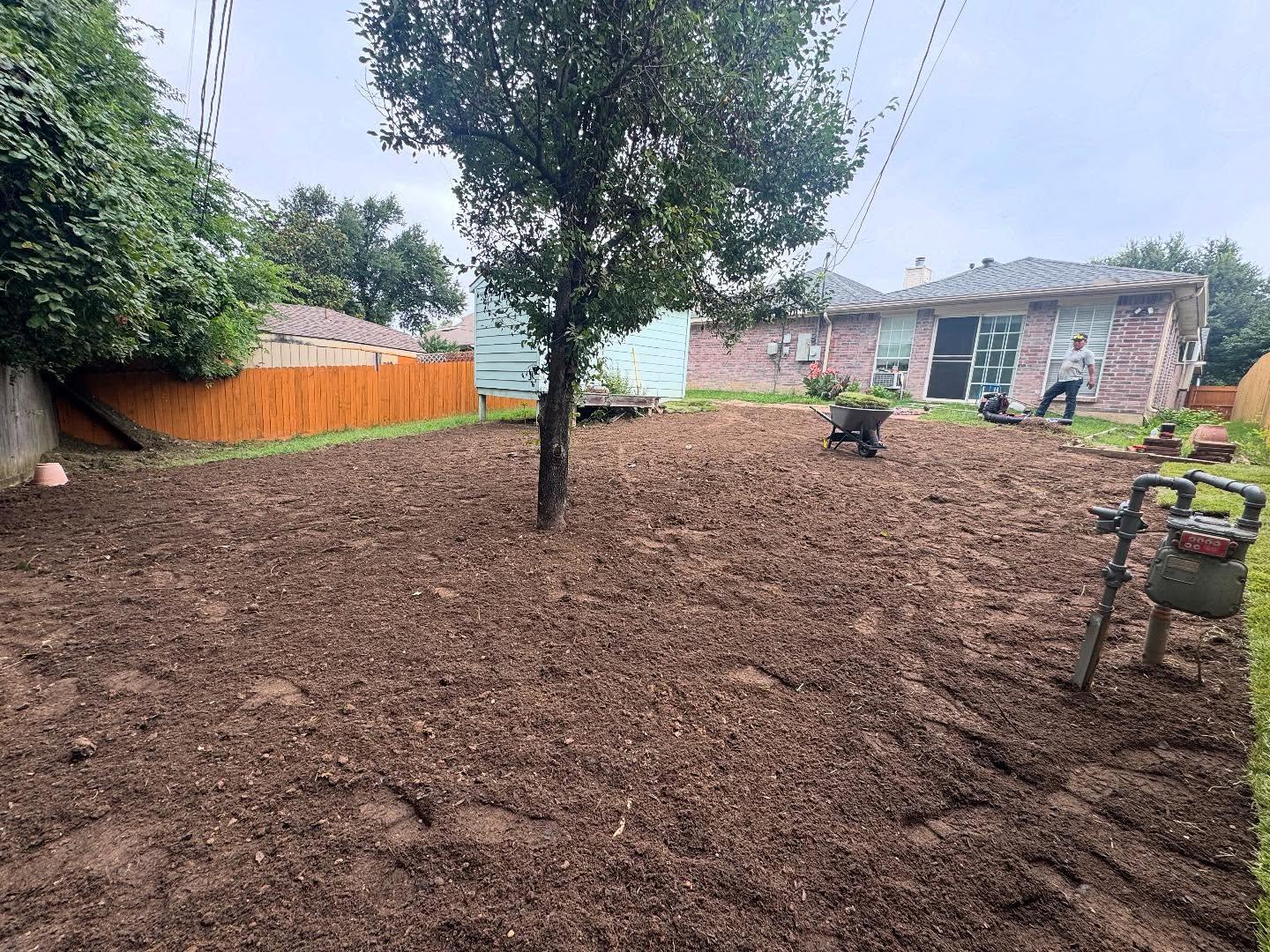
- More than half the lawn is weeds or bare. At that point you are leveling dirt, not a lawn. Grading and new sod costs more up front and gets you a finished lawn in one step. See our soil prep for sod on North Texas clay.
What it costs
Lawn leveling is priced by the square footage treated, the yards of material it takes, and how many passes the yard needs. A handful of low spots is on the low end. A whole-lawn topdress on a large Frisco or Plano lot is a bigger material and labor job, and regrading is its own quote. We price it after a free on-site look, because the difference between a two-wheelbarrow spot fix and a truckload is something you have to see.
How it pairs with a sod install
If you are already planning new sod, you do not topdress first. Grading and leveling are part of the prep on every install we do: old grass out, the yard graded so water runs away from the house, and the surface firmed and set flush with walks and beds before the first roll goes down. That is the one time a lawn gets truly level in a single pass, because there is no grass to grow through anything. Topdressing is the maintenance version of the same idea, for a lawn worth keeping. The rest of that routine is in the complete guide to lawn care in North Texas.
Get a straight answer on your yard
Not sure whether your yard needs a few bags of mix, a full topdress, or a regrade and new sod? Request a free on-site look and we will walk it with you, flag the low spots, and tell you honestly which fix it needs. The window closes when the grass stops growing, so if it is still green, schedule it now.
This article is part of The Complete Guide to Lawn Care in North Texas.