When DFW hits 110 degrees, the answer is simpler than most people expect: water deep and early, cut higher and less often, and let an established lawn go tan without panicking. A brown Bermuda lawn in a heat wave is almost always dormant, not dead, and it greens back up once the heat breaks. The real emergency is new sod, which has no roots yet and can die in a single afternoon at these temperatures. Here is exactly what to do for both.
Let an established lawn go dormant. It is not dying.
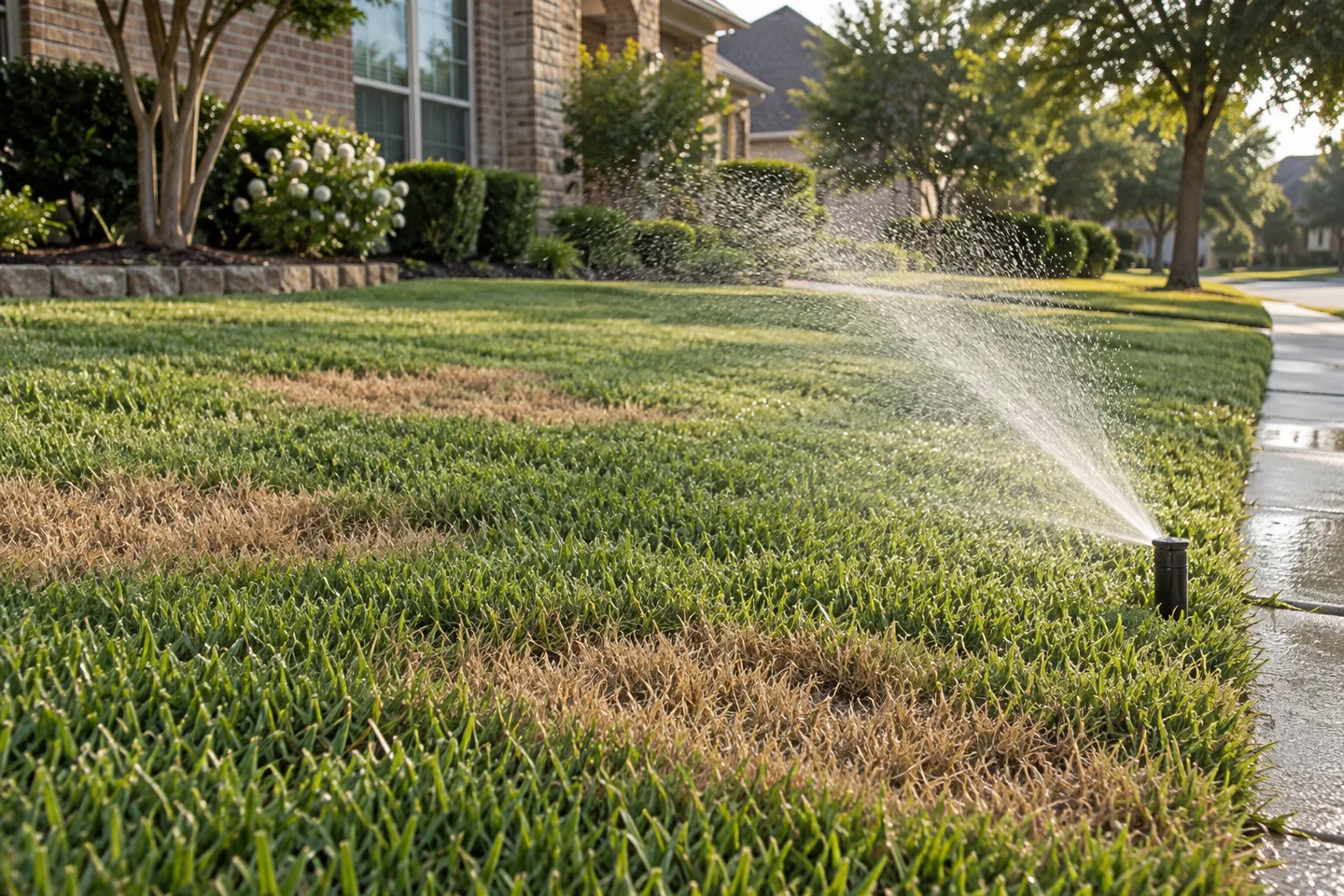
Bermuda, Zoysia, and St. Augustine all protect themselves in extreme heat by going dormant: the blades turn tan and top growth stops while the crown and roots stay alive underground. On the heavy Blackland clay across Carrollton, Plano, Frisco, and the rest of North Texas, an established lawn can sit dormant for weeks and still recover fully once temperatures drop and rain returns.
How to tell dormant from dead: pull a few blades and look at the crown at the base. If it is still firm and pale green, the lawn is dormant and fine. If the crown is brown and crispy across large areas, that section may be lost. In a 110 degree stretch, do not try to force a dormant lawn green with extra water. You will spend money, fight the twice-a-week watering limits, and stress the grass more than the heat does.
Water deep, and water before the sun is up
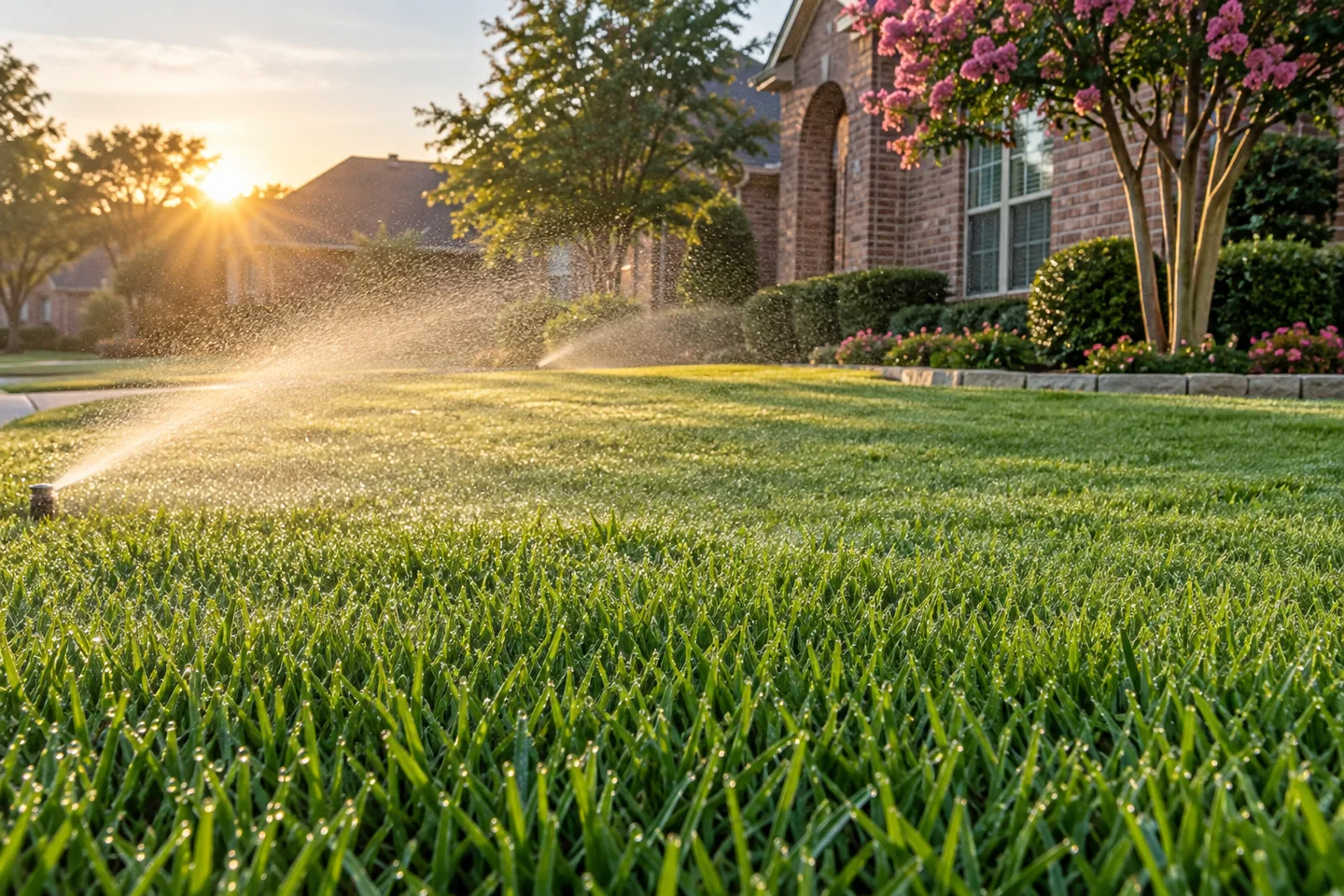
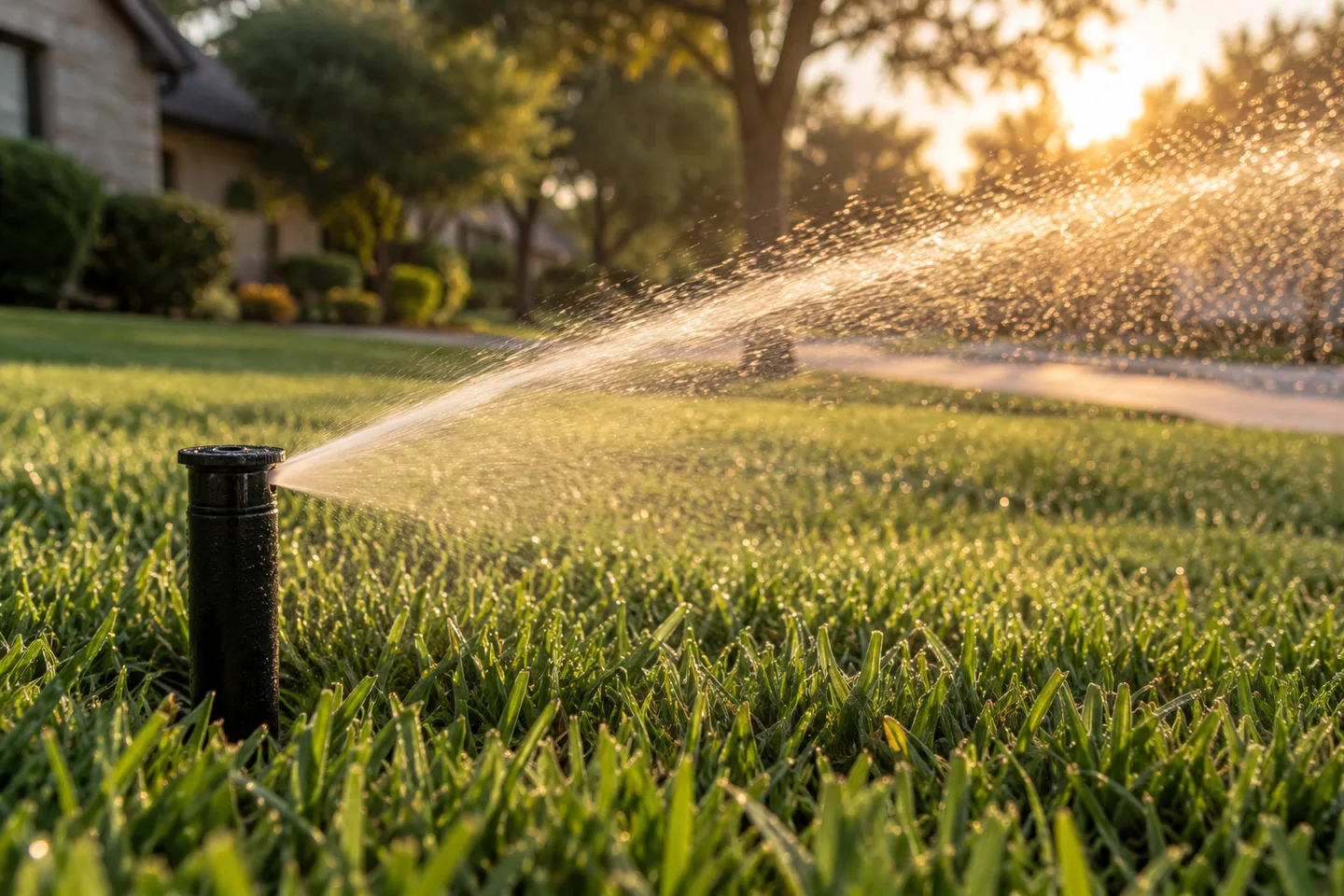
When you do water, do it right. Run your sprinklers between 4 a.m. and 8 a.m. so the water soaks in before the heat burns it off. Midday watering is mostly lost to evaporation, and late-evening watering leaves the lawn wet overnight, which invites fungus.
Aim for about one inch of water per week total, measured with a cup or a rain gauge, split across your two allowed days. Blackland clay cannot absorb an inch in one pass, so it runs off into the street. Use the cycle-and-soak method instead: water 8 to 10 minutes, let it sink in for 30 to 60 minutes, then repeat. Deep, infrequent soaks push roots down where the soil stays cooler. Light daily sprinkles keep roots shallow and make heat stress worse.
Mow high, mow less, keep the blade sharp
Raise your mower. Bermuda and Zoysia should sit around 2.5 to 3 inches in this heat, and St. Augustine around 3.5 to 4 inches. Taller grass shades its own soil, holds moisture longer, and cools the root zone. Never cut off more than a third of the blade in one mow, and mow in the evening when the lawn is not already baking. A dull blade tears the grass and every torn tip loses water, so sharpen it. If the lawn has gone crispy and dormant, just leave it alone until it recovers.
New sod is the exception: water 2 to 3 times a day
New sod is the one lawn that cannot go dormant to save itself. It has no root system yet, so it relies entirely on you for water, and at 110 degrees it can dry out and die within a day. For the first two weeks, water fresh sod in 2 to 3 short cycles a day to keep the soil underneath consistently moist, never soggy and never dried out. North Texas cities grant a 30-day variance from the twice-a-week schedule for new sod, so you are allowed to water it as often as it needs during establishment.
If your new lawn is already yellowing or pulling up at the seams, read why new sod dies in North Texas and our new-sod watering guide for the recovery steps. And if you are planning to put in sod, know that installing during a 110 degree stretch works only if you can commit to that watering schedule. If you cannot, the smarter play is to wait for the fall window (see the best time to lay sod in North Texas), when cooler soil lets a new lawn root with far less water and far less risk.
Heat stress or lawn fungus? How to tell
They look similar from the porch but need opposite fixes. Heat and drought stress shows up as a bluish-gray cast, blades that fold or roll inward like a straw, and footprints that stay pressed into the lawn instead of springing back, usually spread evenly across the sunniest areas. Fungus shows up as irregular brown patches, rings, or spots, often after humidity or overwatering, and it spreads in a defined shape rather than an even thinning. Watering more to fix what is actually fungus will make it worse, so match the fix to the cause. Our guide on lawn fungus versus heat stress walks through both.
What not to do when it is over 100
- Do not fertilize. Feeding pushes tender growth the lawn cannot support in this heat, and it can chemically burn stressed grass.
- Do not apply weed-and-feed or herbicide. In extreme heat these can volatilize and damage the lawn, the beds, and nearby trees.
- Do not scalp the lawn. Short grass bakes the soil and the crown. Higher is safer.
- Do not water at noon. Most of it evaporates before it helps.
- Do not add heavy foot traffic. Walking on a heat-stressed lawn crushes the crowns you are trying to protect.
Quick answers
Should I water every day in a heat wave? For an established lawn, no. Deep soaks on your two allowed days beat daily sprinkles. New sod is the exception and does need water 2 to 3 times a day.
My lawn is brown. Is it dead? Usually not. If the crown at the base is still firm and pale green, it is dormant and will recover after the heat breaks.
When is the best time to water? Before 8 a.m. Early morning loses the least to evaporation and lets the lawn dry before night.
Worried about new sod in this heat, or planning a new lawn once it cools off? Get a free estimate or call 469-671-8467 and we will tell you honestly whether to install now or wait for the fall window.