Yes, flagstone patios and walkways are worth it in DFW, as long as the stone goes down on a properly prepared base. Natural Oklahoma and Texas sandstone shrugs off our summer heat and, when set dry on compacted gravel, rides the movement of Blackland Prairie clay instead of cracking with it. The trade-offs are real: flagstone costs more than concrete pavers, the surface is never perfectly even, and a skimped base will let it settle. Here is how we think about it, and what we recommend for yards from Carrollton to Lewisville.
What flagstone actually is
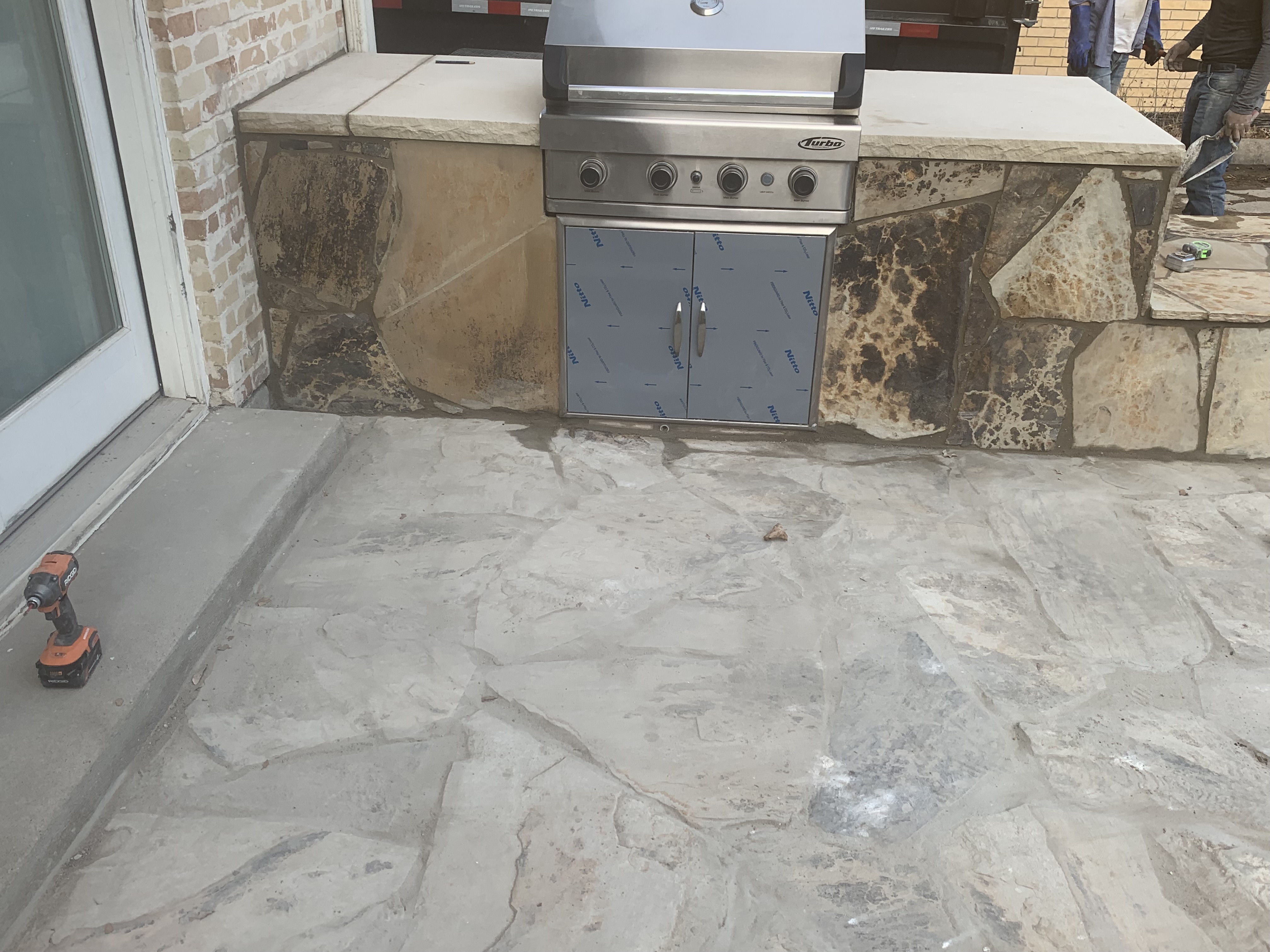
Flagstone is not one rock. It is any flat, split sedimentary stone sold in irregular slabs, usually one to two inches thick. Around DFW the stone yards carry mostly Oklahoma sandstone (the tan, brown, and rust colors you see on so many North Texas patios) and Texas limestone, which runs from cream to gray. Both are quarried within a few hours of the metroplex, which keeps the material reasonable and means it weathers the way local stone should.
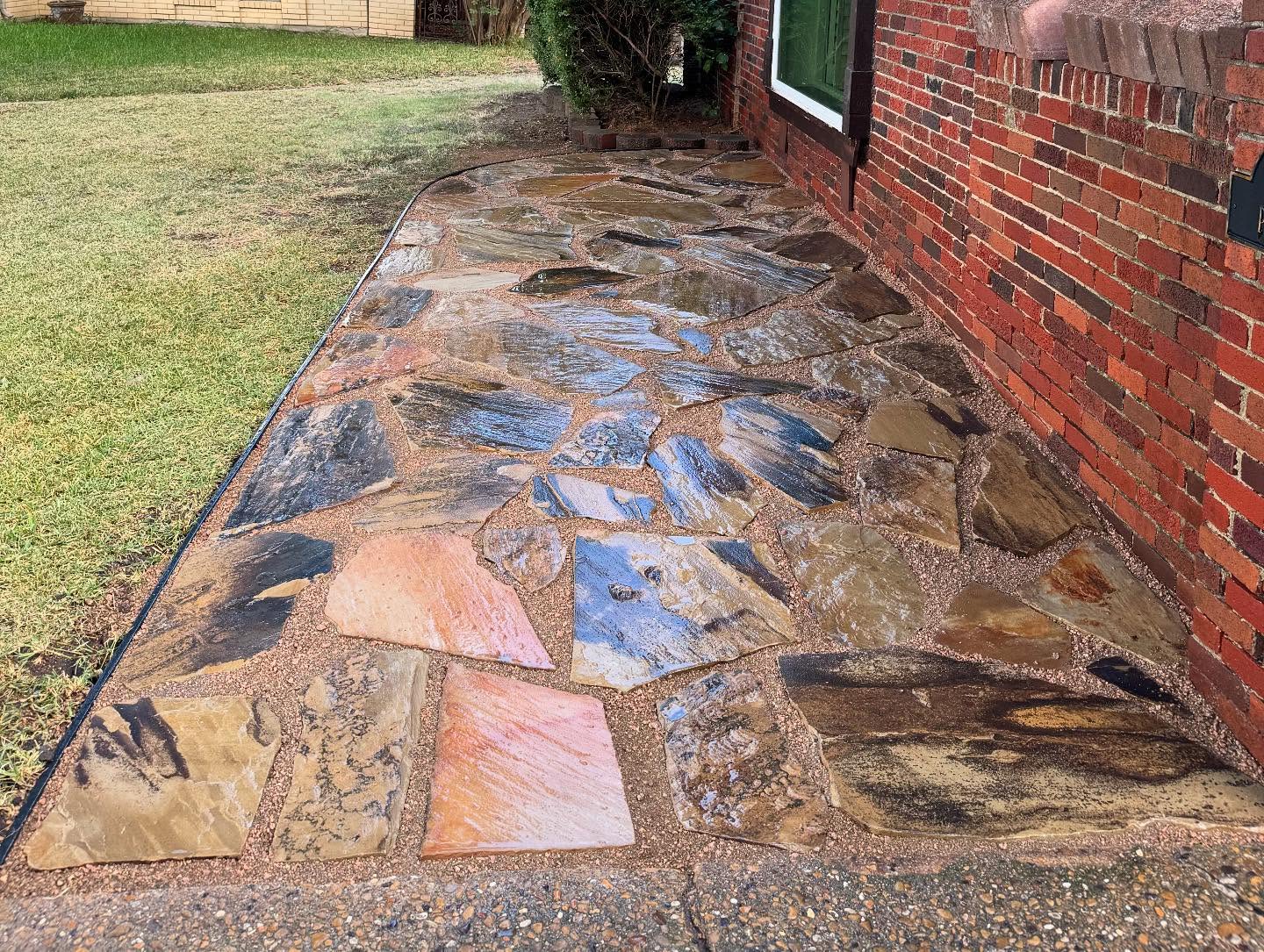
The irregular shape is the whole appeal. A flagstone walkway looks like it grew there, especially next to native plantings, live oaks, and cedar elm shade. It is also the reason a flagstone job takes more skill than pavers: every piece is fit by hand.
Dry-laid or mortared: what we recommend on clay
There are two ways to set flagstone, and on Houston Black clay the choice matters more than the stone.
- Dry-laid. The stone sits on a compacted crushed-rock base with decomposed granite or polymeric sand swept into the joints. No concrete slab.
- Mortared. The stone is set in mortar on top of a poured concrete slab, with mortared joints.
For most North Texas patios and nearly every walkway, we recommend dry-laid. Our clay swells after a wet spring and shrinks through August. A mortared flagstone patio is really a concrete slab with stone glued to it, so when the slab moves, the mortar joints crack and stones pop loose, and the repair shows. Dry-laid flagstone moves as a group the way pavers do. If a stone rocks or settles years later, we lift it, add base, and reset it in an afternoon.
Mortared flagstone still has a place: pool decks, covered patios on an existing slab, and steps where you want a solid tread. We tell you which one fits your site during the free on-site walk.
Walkway or patio: where flagstone shines
Flagstone is our first pick for walkways. A path from the driveway to the back gate, a route through a planting bed, or a stepping-stone line across a side yard all suit the irregular shape, and the smaller area keeps the cost in check.
For patios, flagstone is a great fit when you want a natural, organic look and you are not planning to slide heavy furniture around every weekend. If you want a dining set and a grill on a dead-flat, modular surface, pavers are the easier answer. We cover that decision in pavers vs concrete vs stamped in DFW.
How it handles Texas heat
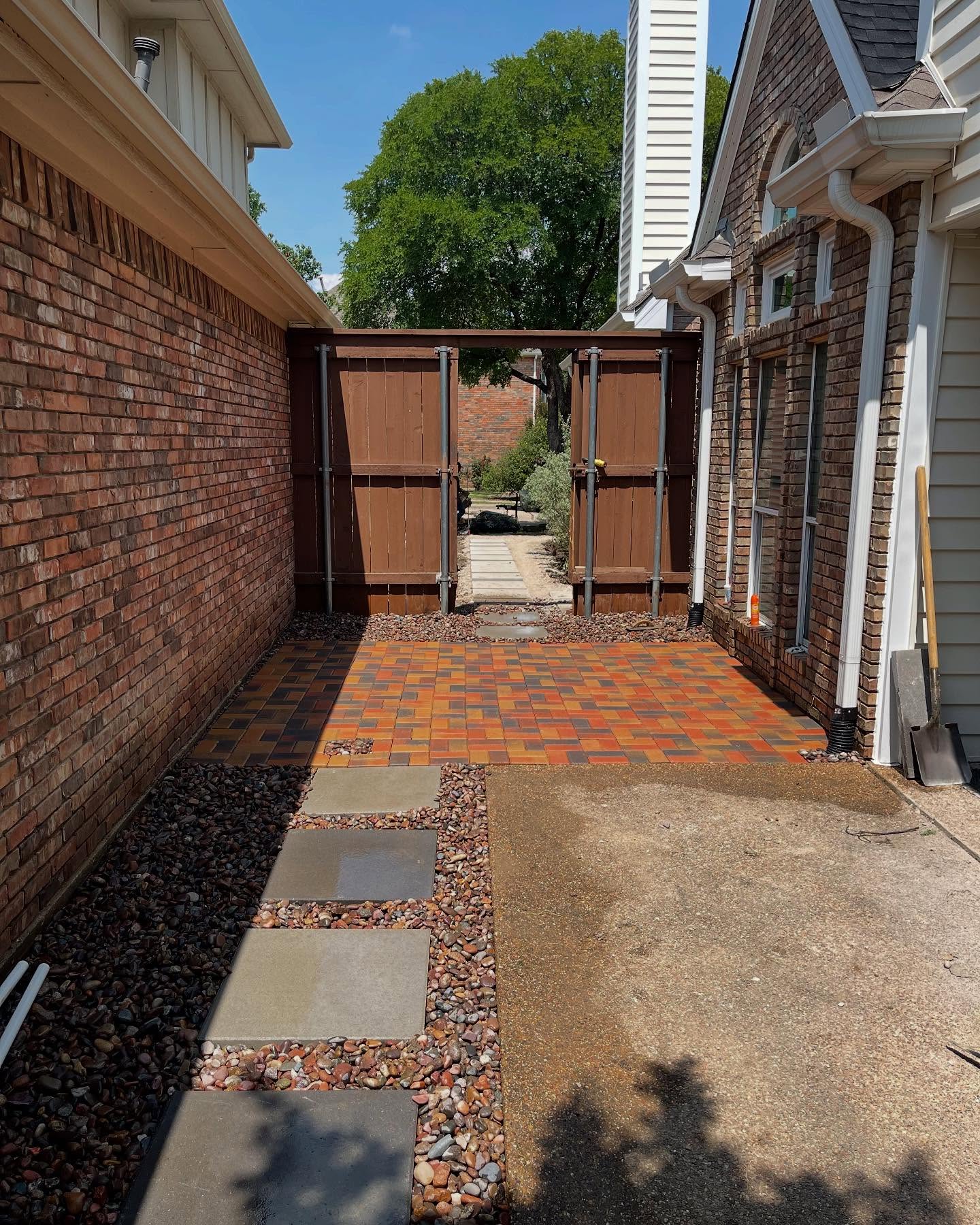
Stone color drives heat underfoot more than the material does. Light Texas limestone and pale sandstone stay noticeably cooler than dark pavers or dark stamped concrete in August sun. Rust-colored Oklahoma sandstone runs warmer. If you plan to walk the patio barefoot, lean toward lighter stone. The full heat comparison is in the best patio material for Texas heat.
Flagstone also does not fade. There is no surface color coat to bleach out. The stone looks the same in year ten as it did in year one, which is not true of stamped concrete.
Base prep and drainage: where flagstone jobs go wrong
Every flagstone failure we get called to fix has the same cause: the base was skipped or thin. The right build on North Texas clay is excavation to depth, crushed rock compacted in lifts, geo-grid where the clay is soft, and a bedding layer of decomposed granite or sand before the stone goes down. On slopes or in low spots, drainage is planned first, because clay holds water, and trapped water is what heaves stone.
A cheap flagstone bid usually means stone dropped on a couple of inches of sand over raw dirt. It looks fine on day one. By the second summer the stones rock and the joints wash out.
Maintenance
Dry-laid flagstone needs a little attention: sweep in fresh joint material every year or two, pull any weeds that root in the joints, and pressure wash and reseal every few years if you like the wet-look finish. Mortared flagstone needs less joint care but more repair when the slab moves. Neither is high maintenance compared to a wood deck.
The honest downsides
- Cost. Flagstone walkways start around $22 per square foot installed, at the top of the $18 to $28 range for concrete pavers, because every piece is hand-fit. See how much a paver patio costs in DFW for how those numbers compare.
- Uneven surface. Natural stone varies in thickness. A good installer keeps it level, but it is never as uniform as pavers. Not ideal for wheeled furniture or anyone unsteady on their feet.
- Settling if the base is skimped. Stone is heavy. Without a compacted base it sinks into the clay.
- Matching later. Resetting a stone is easy. Matching new stone to a ten-year-old patio takes some sorting through the pallet.
Flagstone in Lewisville
Lewisville yards are a natural fit for flagstone, and the city has a few conditions worth knowing. Old Town Lewisville lots carry mature live oaks and pecans, and a dry-laid flagstone path threads between roots better than a poured walk, which roots will eventually crack. Castle Hills (the Lewisville one) runs larger lots with defined landscape standards, and Texas limestone flagstone reads clean enough for an HOA color review while still looking natural. The lake-adjacent blocks near Lakeway and Lakepointe bring slopes and a higher water table in spots, so those walkways get extra base depth and drainage planned in before any stone is set. If your yard is in Lewisville, start at hardscaping in Lewisville.
Bottom line
Flagstone is worth it in DFW if you want a natural look and you hire someone who builds the base right. Choose dry-laid on compacted gravel over mortared on a slab, pick a lighter stone if heat matters, and expect to pay a bit more than pavers for a surface that never fades. For the whole decision, from material to base to drainage, read the complete guide to hardscaping in DFW.
Ready to see what a flagstone walkway or patio would look like in your yard? We measure on site, talk through stone choices, and give a fixed written quote. Request a free on-site estimate for hardscaping in Carrollton or in Lewisville.
This article is part of The Complete Guide to Hardscaping in DFW.